

Add to Inquiry Cart
About This Product
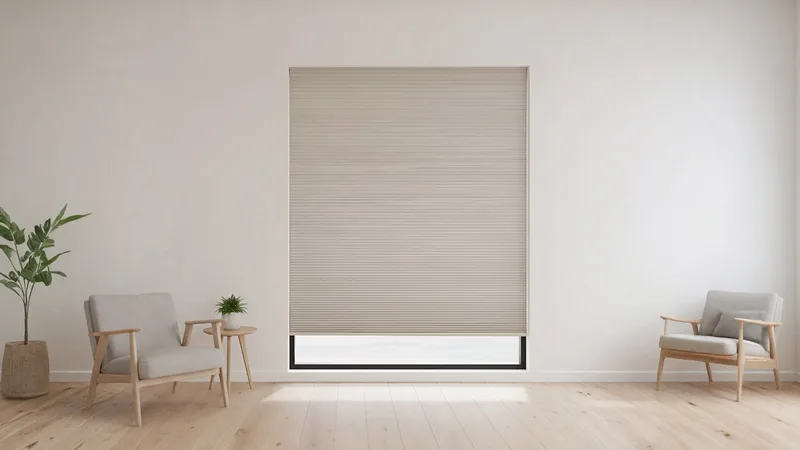
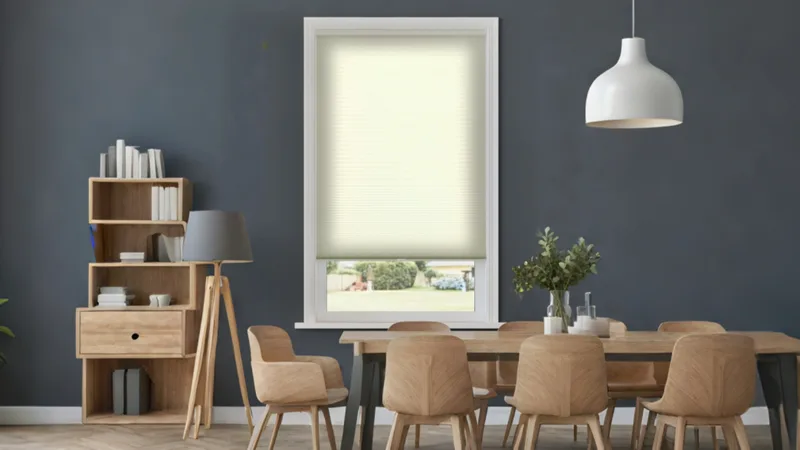
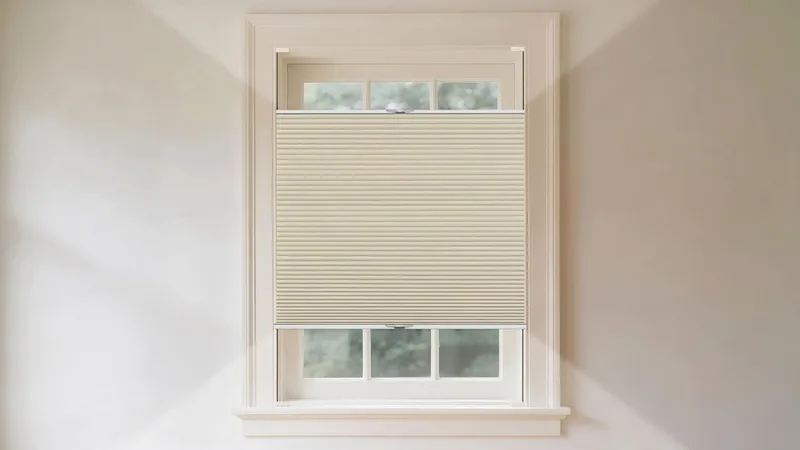
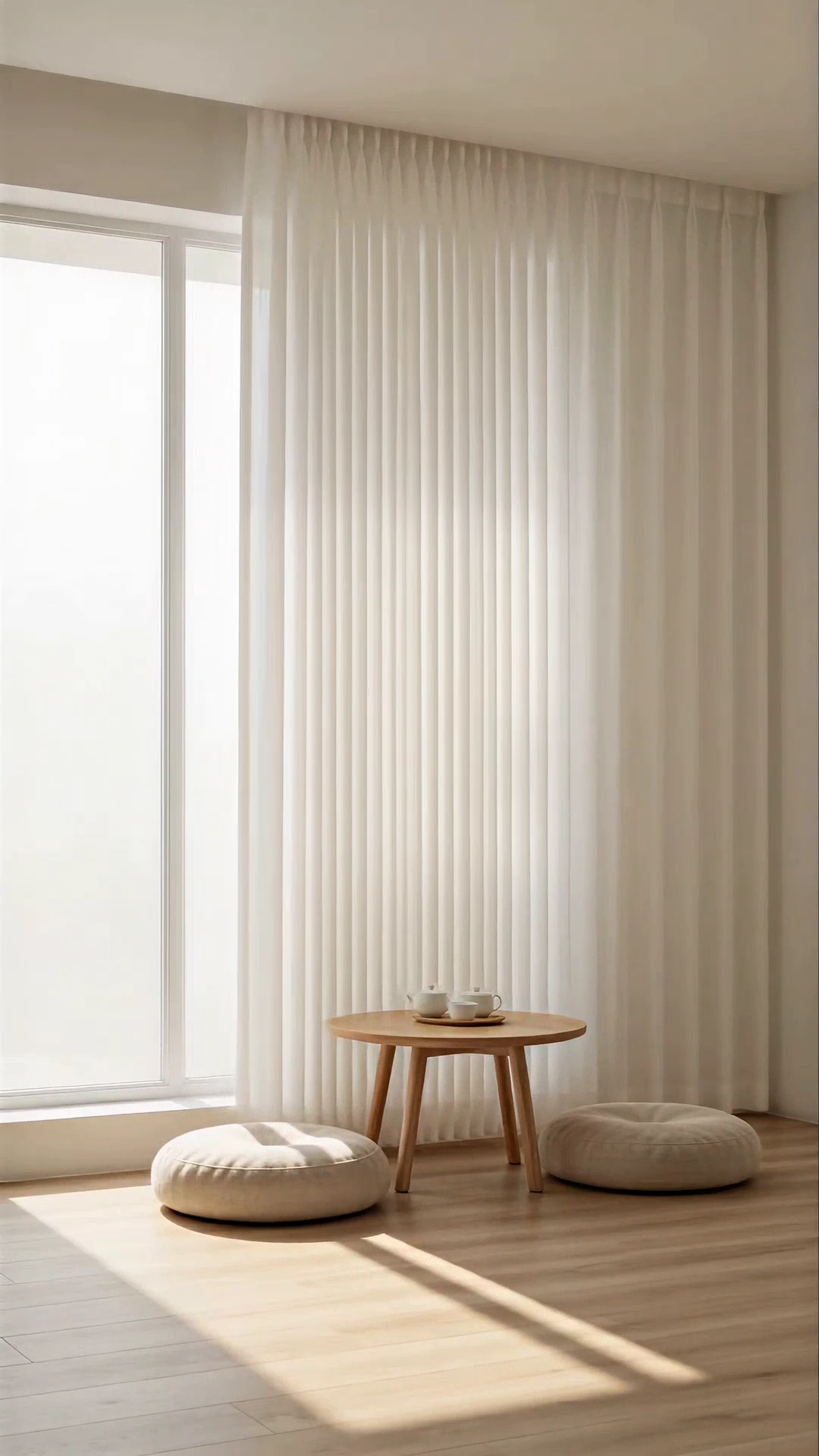
Our standard Honeycomb Shades feature a unique hexagonal cellular structure that traps air and creates a thermal barrier between the window and the room, delivering superior insulation and energy efficiency. The semi-sheer non-woven fabric gently filters natural light while providing daytime privacy, and the accordion-style pleating allows for compact stacking when raised. Child safety device (chain tensioner) included
- Hexagonal cell structure traps air, reducing heat loss by 40% and heat gain by 60% for energy savings.
- Non-woven fabric gently diffuses natural light while maintaining daytime privacy and a bright atmosphere.
- OEKO-TEX Standard 100 certified fabrics with low chemical emissions for healthier indoor environments.
Honeycomb Shade
YH557
Product Specifications
Operation
Pull Cord / Ball Chain
Opacity
Semi-Sheer
Material
Non-Woven
MOQ
1000 pcs/pattern (no color matching) | 2500 pcs/pattern (color matching)
Lead Time
40-50 Days
Packaging
Inner Box
Clear Box
Master Carton
5-layer Corrugated Carton
Pieces per Carton
4-6
FAQ
Both have similar core requirements (cord loop ≤220mm, securing devices, tension devices), but key differences: 1) Canada explicitly requires tension devices to withstand at least 35N force, while US standard does not specify a numerical value; 2) Canada limits single cord accessible length to 300mm, while US standard focuses on loop cords; 3) Canada requires safety warning labels in both English and French, while US only requires English. It is recommended to design products meeting both simultaneously to cover the entire North American market.
It is recommended to use Canada SOR/2017-117 as the design baseline, as it is the strictest cord safety regulation worldwide — explicitly requiring tension devices to withstand at least 35N force and limiting single cord accessible length to 300mm, requirements that exceed other markets. Products designed to Canadian standards automatically meet EU, US, UK, and Australian requirements, achieving "one design, global compliance."
Yes, products completely without accessible cords, chains, ropes, or loops are exempt from cord safety regulations in all five markets. However, note: 1) If the product is equipped with emergency cords or backup cords, those cords must still comply; 2) Motorized product remote controls or control devices are not subject to cord regulations but must meet electrical safety standards; 3) "Cordless" definitions vary slightly by market, it is recommended to ensure the product has completely no accessible cords.
The EU EN 13120 standard requires cord retention devices to withstand a pull force of at least 40N without releasing the cord, while the Canadian SOR/2019-97 regulation requires 90N. Canada's requirement is significantly higher than the EU's. If products are sold in both markets, they should be designed to meet the higher 90N standard to ensure cross-market compliance.
The core warning content (child strangulation risk, correct installation of safety devices, keep away from children) can be used universally, but language requirements differ: US, UK, Australia only need English; EU needs national languages; Canada requires both English and French. It is recommended to design multi-language label templates including English + French + German + Spanish + Italian and other major market languages, one printing covering multiple markets. Note: Canada requires English-French information "equal prominence", cannot have one language larger than the other.
Our standard trade term is FOB Shanghai. Payment terms are typically 30% deposit by T/T after order confirmation, with the 70% balance due before shipment. We accept T/T bank transfer. For large orders, irrevocable L/C at sight can be discussed. Other trade terms (CIF, DDP) are available upon request.