



Add to Inquiry Cart
About This Product
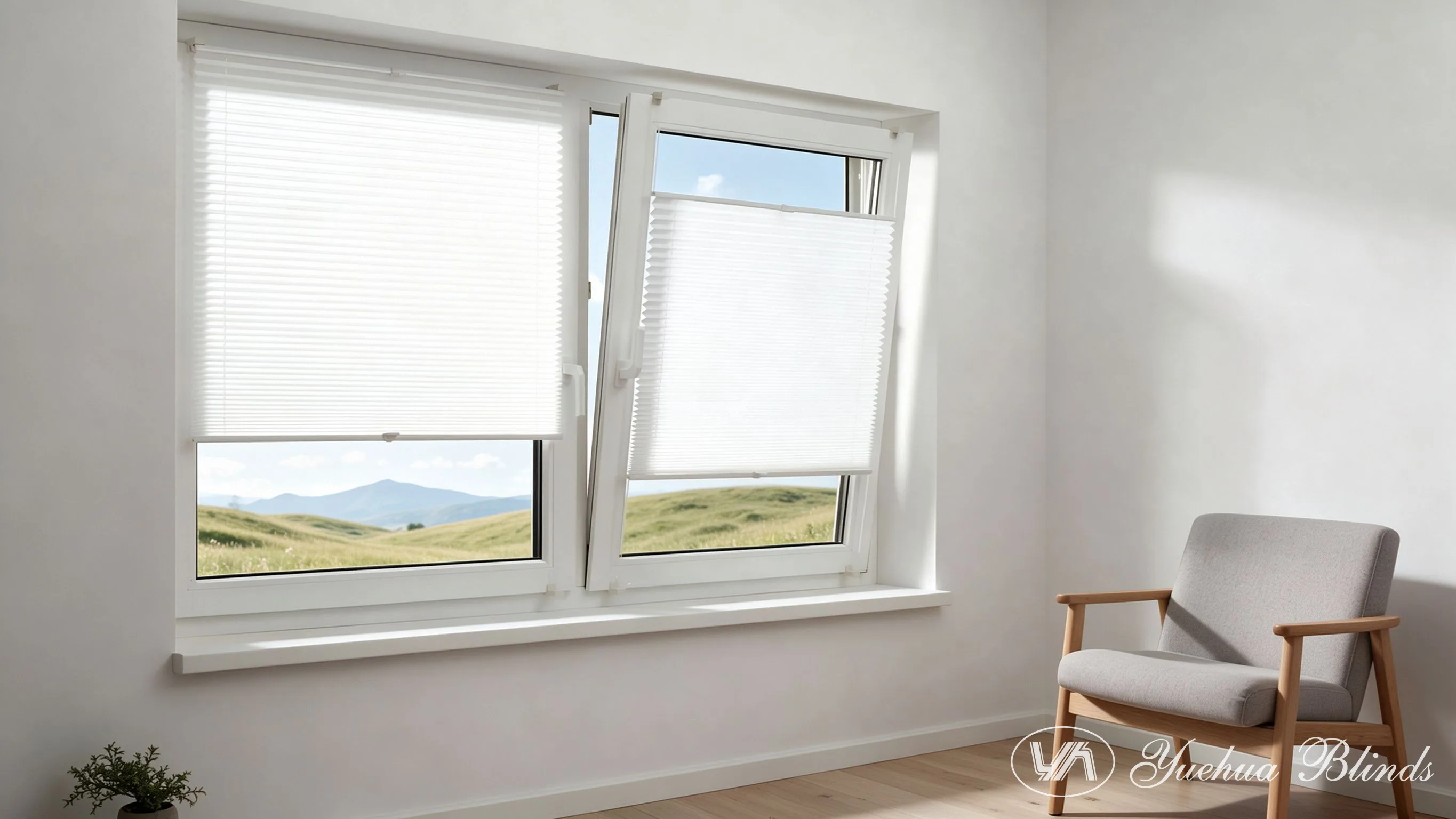
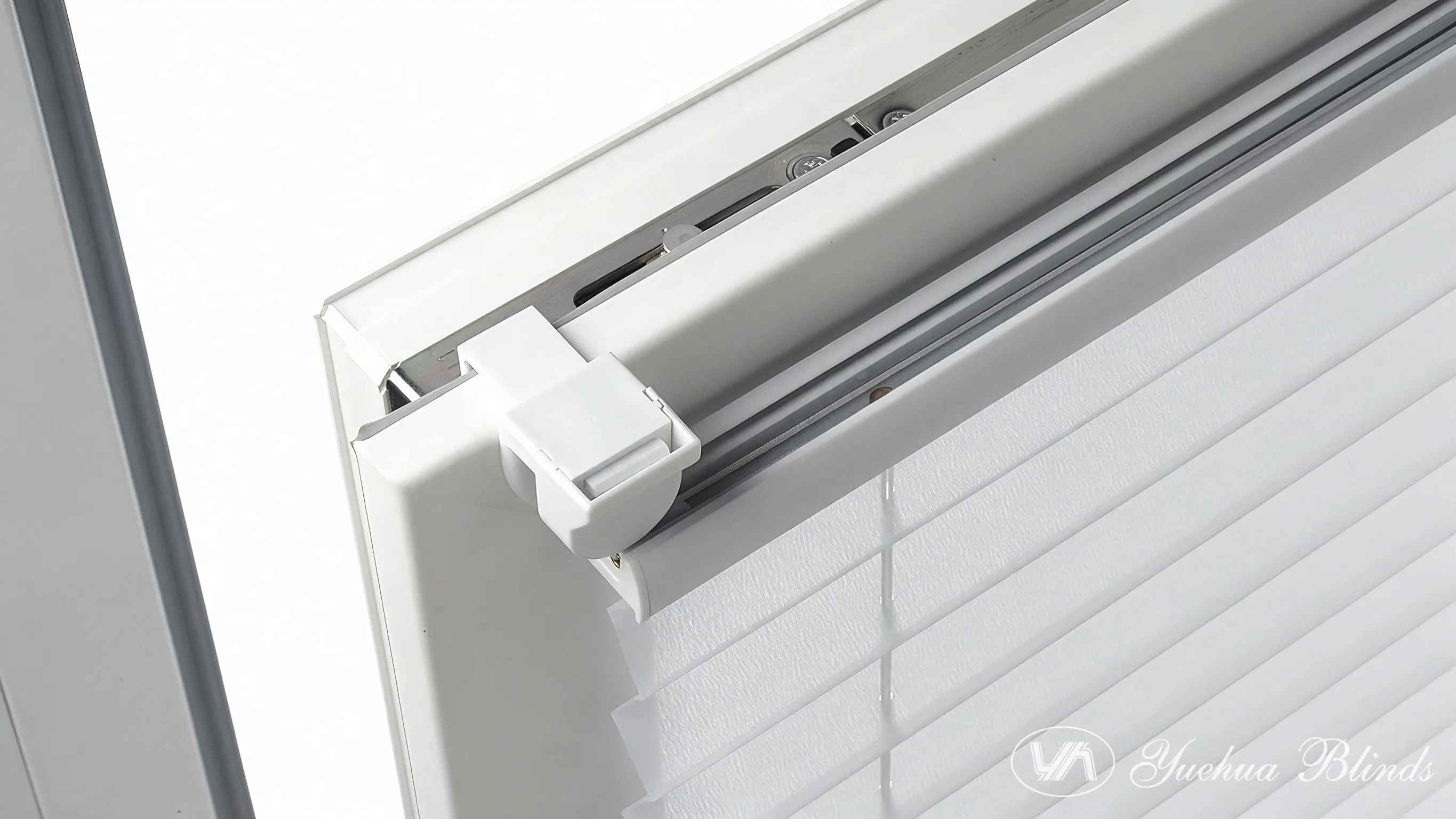
Our Easyfix Tensioned Pleated Blinds combine the clean, versatile aesthetic of pleated shades with the convenience of tool-free, no-drill installation. The Easyfix mounting system uses pressure or adhesive brackets that install in minutes without tools, drilling, or damage to window frames — perfect for renters and temporary installations.
- Tool-free pressure/adhesive mounting installs in minutes without damage to window frames.
- Push-pull cordless operation with semi-sheer light filtering; slim profile fits any window recess.
- Perfect for rentals, dorms, and temporary spaces where drilling or permanent installation is not possible.
Easyfix Tensioned Pleated Blinds
YH555E
Product Specifications
Operation
Cordless
Opacity
Semi-Sheer
Material
100% Polyester
MOQ
1000 pcs/pattern (no color matching) | 2500 pcs/pattern (color matching)
Lead Time
40-50 Days
Packaging
Inner Box
Clear Box
Master Carton
5-layer Corrugated Carton
Pieces per Carton
4-6
FAQ
Yes, products completely without accessible cords, chains, ropes, or loops are exempt from cord safety regulations in all five markets. However, note: 1) If the product is equipped with emergency cords or backup cords, those cords must still comply; 2) Motorized product remote controls or control devices are not subject to cord regulations but must meet electrical safety standards; 3) "Cordless" definitions vary slightly by market, it is recommended to ensure the product has completely no accessible cords.
Light-filtering blinds are ideal for living rooms, dining rooms, kitchens, home offices, and sunrooms where you want natural light while reducing glare and UV exposure. They soften incoming light and create a warm, inviting atmosphere without completely blocking the view. They are not recommended for bedrooms where complete darkness is needed for sleep, or for media rooms where projector or TV screen visibility matters.
Pleat factor (also called fabric multiplier) is the ratio of expanded fabric length to finished blind height. For standard pleated blinds, the industry average is approximately 1.3 — meaning 1 meter of finished height requires 1.3 meters of expanded fabric. It matters because fabric is the largest cost component in blind manufacturing; a 0.1 error in pleat factor on a large order can mean thousands of dollars in wasted fabric or underquoting.
Use the formula: Fabric consumption (m²) = Finished width (m) × Finished height (m) × Pleat factor + Allowance. The pleat factor is typically 1.3 for standard pleated blinds, and the allowance is usually 3–5% for edge wrapping, rail attachment, and cutting waste. For example, a 120×200 cm pleated blind consumes approximately 3.28 m² of fabric per unit.
Use the three-dimensional method: (1) Straightness — every pleat line should be straight and parallel, no S-shaped bends; (2) Uniformity — pleat spacing should be even within ±1 mm deviation; (3) Resilience — expand a section of pleats, hold for 3 seconds, release, and quality pleating should restore within 1 second. Weakly-set pleats will gradually flatten after months of use, which is a common cause of customer complaints.
Our standard trade term is FOB Shanghai. Payment terms are typically 30% deposit by T/T after order confirmation, with the 70% balance due before shipment. We accept T/T bank transfer. For large orders, irrevocable L/C at sight can be discussed. Other trade terms (CIF, DDP) are available upon request.