


US Window Blinds Compliance Guide: CPSC, Prop 65 & Section 301 Tariffs

US compliance for window blinds is more structured than most markets, but the workload is split. The importer handles the market-entry side - CPSC testing, Prop 65 warning decisions, ISF filing and duty payment. The factory handles the product side: corded blinds built to 16 CFR Part 1260, permanent warning labels, and chemical test reports for Prop 65. Manual blinds are exempt from motor electronics rules, and residential retail blinds do not need flame-retardant testing.
Key takeaways for a US order
- 16 CFR Part 1260 has been mandatory since August 15, 2024. It replaced the old voluntary standard, and every corded blind sold in the US must meet it or be cordless. Testing must come from a CPSC-accepted laboratory, and the importer keeps the report.
- Inner cords may not form a loop larger than 4 inches under 5 pounds of force. Outer cords need a tension device or breakaway mechanism. Cordless spring or push-pull blinds skip the cord argument entirely.
- Prop 65 is not a ban. It requires a clear warning on lead, cadmium, phthalates, formaldehyde or azo dyes above safe harbor levels. Enforcement is private ("bounty hunter"), up to $2,500 per product per day.
- Chinese blinds pay Section 301 duties on top of the base rate (typically 7-12%). Commercial shipments over $800 do not use the de minimis exemption, and ISF 10+2 must be filed 48 hours before loading.
CPSC 16 CFR Part 1260: the cord rule
16 CFR Part 1260 is the federal mandatory window covering safety standard, effective August 15, 2024. It replaced the earlier voluntary regime, and it is the first thing a US customs broker or retailer will ask about.
- Inner cords must not form a loop greater than 4 inches when 5 pounds of force is applied.
- Outer cords must carry tension devices or breakaway mechanisms.
- Products must be tested by a CPSC-accepted laboratory; test reports are maintained by the importer.
- Corded products must carry permanent warning labels about child strangulation.
- Cordless products - spring-assisted or push-pull - are exempt from cord-specific requirements, though they still must meet general safety rules.
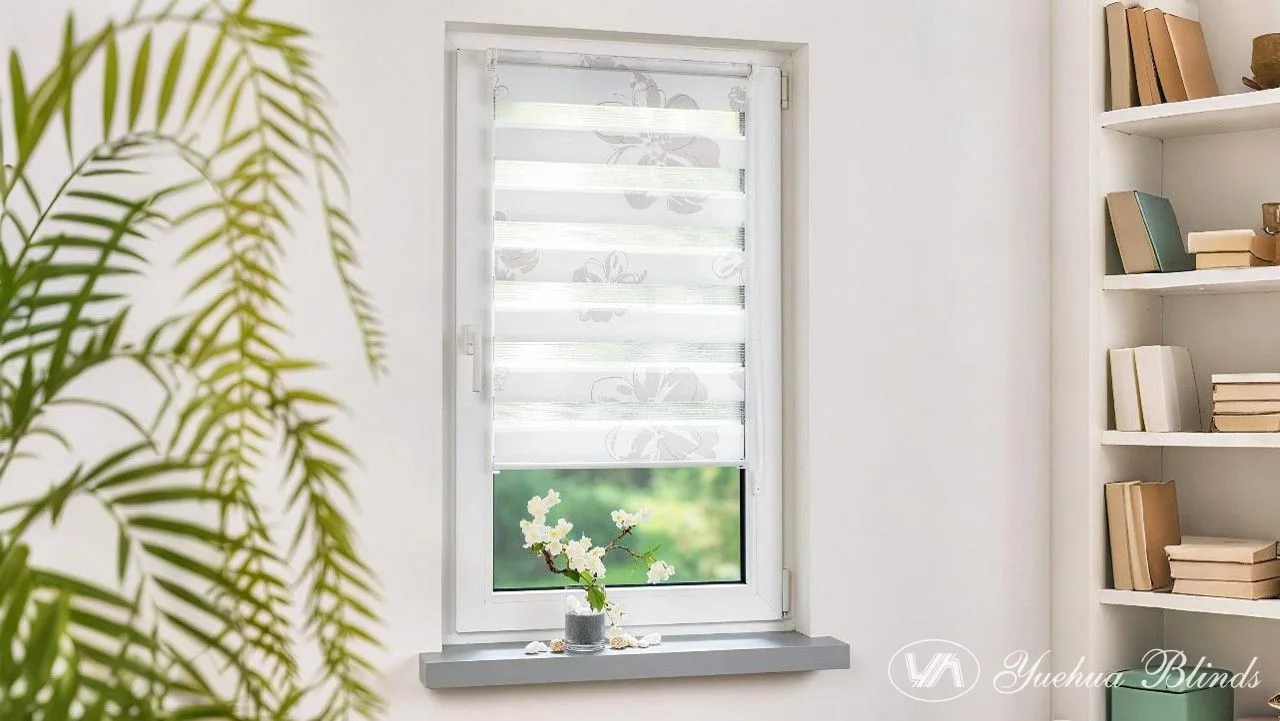
From our side, the safety device is fitted during production, not added at the end. Our cordless lines - the cordless zebra blinds are the practical example - remove the cords and with them most of the CPSC conversation, which is what most US retail buyers ask for first.
California Prop 65: warnings, not bans
Proposition 65 applies to any product sold in California, or that may be resold into California, which covers effectively every US importer. If a listed chemical is present above safe harbor levels, a clear and reasonable warning is required before purchase.
- Chemicals that show up in blinds: lead, cadmium, phthalates (DEHP, DBP, BBP), formaldehyde, azo dye aromatic amines.
- Warnings can go on labels, packaging, catalogs or websites, and must be visible before purchase. The standard wording starts with "WARNING:".
- Enforcement is a private right of action - effectively a bounty-hunter system - with penalties up to $2,500 per product per day.
- The supplier provides chemical test reports for fabrics and components; the importer decides whether exposure triggers a warning.
The practical move is to ask for lead, phthalate and azo reports up front rather than negotiate a warning label after a shipment is already on the water.
Flame retardant: not one federal rule
- There is no mandatory flame-retardant standard for residential window blinds at federal level.
- NFPA 701 is the test method most often referenced by building codes for public buildings - hotels, offices, hospitals.
- Some California cities and other jurisdictions require flame-retardant coverings in public buildings.
If your channel is contract or project business, pre-testing fabrics to NFPA 701 at sourcing stage is worth it. Residential retail does not need it.
Tariff and customs
- HTS classification: window blinds typically fall under 6303.12 (synthetic fibers) or 6303.92 (other textile materials). The code changes the duty rate.
- Section 301: Chinese-made blinds carry additional duties of 7.5% or 25% depending on the list. The importer confirms which list the product is on.
- Section 321 de minimis: shipments under $800 enter duty-free, but this does not apply to commercial bulk imports.
- ISF 10+2: the Importer Security Filing goes to CBP at least 48 hours before cargo is loaded, with 10 importer and 2 carrier data elements.
- Duty calculation: product value x (base rate + Section 301 rate). Base rates typically run 7-12% by HTS code.
FTC textile labeling
- Fiber content declared by weight percentage in descending order, e.g. "100% Polyester".
- Country of origin marked, typically "Made in China".
- Care Labeling Rule requires care instructions on most textile products.
- The label shows the importer or manufacturer name, or an RN number.
Who does what
The common failure is treating US compliance as one side's problem. It is shared, and the split below is what works in practice.
| Item | Responsibility | Notes |
| CPSC 16 CFR 1260 | Importer primary | Federal mandatory since Aug 2024. Importer verifies third-party testing; supplier builds to standard. |
| Prop 65 warning decision | Importer | Importer assesses exposure; supplier provides chemical data. |
| ISF 10+2 filing | Importer | 48 hours before vessel loading. Entirely the importer's obligation. |
| Section 301 / duty payment | Importer | Base rate plus additional duties paid to CBP. |
| FTC textile labeling | Joint | Fiber content, origin, care label, RN. Supplier prints per importer specs. |
| CPSC test report | Supplier | Corded products tested at a CPSC-accepted lab; importer archives. |
| NFPA 701 report | Supplier | Contract/public-building orders only; residential retail not required. |
Bottom line
A US-ready blind order comes down to four facts: the importer files ISF and pays Section 301 duties, decides Prop 65 warnings, and archives CPSC reports; the factory builds corded blinds to 16 CFR 1260 with safety devices fitted and prints FTC labels to spec. Cordless lines skip the cord testing. Get those right and the rest is paperwork.
For the chemistry behind Prop 65 and REACH, our chemical restriction guide covers the substance limits. To see how 16 CFR 1260 compares with the EU and Canadian cord rules, the cord safety standards comparison lays it out. If you want to keep the cord paperwork light, the cordless zebra blinds page lists the cordless build we ship.
Standards referenced here were checked against current obligations in October 2026.