


Cord Safety Standards: EN 13120 vs ANSI/WCMA vs SOR/2017-117

Window blind cords are one of the leading causes of accidental death among young children, which is why every major market has turned cord safety from a voluntary standard into a market-access requirement. For a B2B buyer, the useful comparison is between the EU's EN 13120, the US ANSI/WCMA A100.1 (now enforced through CPSC 16 CFR 1260) and Canada's SOR/2017-117. They share the same intent - cut accessible cord loops - but the test mechanics and paperwork differ.
Key takeaways
- EN 13120:2009+A1:2014 is mandatory across the EU and pairs a cord release device with child safety pictograms. It requires a Declaration of Conformity, the CE mark and 10 years of technical files.
- ANSI/WCMA A100.1 is technically voluntary but effectively mandatory - the CPSC references it in 16 CFR Part 1260, and Home Depot, Lowe's and Walmart require it. Third-party test reports are the proof.
- SOR/2017-117 is fully mandatory Canadian law, caps free cord length at about 20 cm and bans fixed looped cords. Warning labels must run in English and French.
- Cordless products - spring, push-pull, motorized - are defined and exempt in all three regimes, and retailers are shifting shelf space toward them.
EU: EN 13120
EN 13120, Interior blinds - Performance requirements including safety, was first published in 2004 and revised to its current EN 13120:2009+A1:2014. It is mandatory for every interior blind sold in the EU.
- Operating cords are held within specified free-length limits.
- A cord release device must open under a defined pull force, so a child cannot stay entangled.
- Packaging and instructions carry child safety warnings and pictograms.
- Installation guidance keeps cords out of children's reach.
- Cordless mechanisms are actively preferred.
Manufacturers issue a Declaration of Conformity to EN 13120, affix the CE mark and keep technical documentation for 10 years for market surveillance.
United States: ANSI/WCMA A100.1
ANSI/WCMA A100.1, the American National Standard for Safety of Corded Window Covering Products, is developed by the Window Covering Manufacturers Association. It is voluntary on paper but effectively mandatory in practice.
- CPSC's 16 CFR Part 1260 (mandatory since August 2024) references its test methods.
- Major retailers - Home Depot, Lowe's, Walmart - require supplier products to comply.
- Accessible cord length is strictly limited; wall tension devices prevent looped cords.
- Permanent warning labels and a clear cordless product definition are required.
Proof is a third-party laboratory test report. CPSC can inspect market product and force recall of non-compliant goods.
Canada: SOR/2017-117
SOR/2017-117, the Window Coverings Regulations, is enacted by Health Canada under the CCPSA and came into force in 2017. It is law, not a standard.
- Free operating cord length must not exceed about 20 cm (roughly 8 inches).
- Mechanisms that form fixed looped cords are prohibited.
- A pull-release device is required.
- Warning labels follow a specified format, in English and French.
Health Canada can inspect, seize and prosecute. Technical documentation and test reports must be retained.
The three standards compared
| Dimension | EU EN 13120 | US ANSI/WCMA A100.1 | Canada SOR/2017-117 |
| Status | Mandatory EU harmonized | Voluntary, effectively mandatory | Mandatory federal regulation |
| Regulator | Commission / market surveillance | CPSC | Health Canada |
| Cord limit | Specified free-length limits | Specified accessible limits | Free cord about 20 cm |
| Release device | Required | Tension device required | Required |
| Warning labels | Packaging and instructions | Permanently attached | Specified format, bilingual |
| Cordless | Preferred | Defined and exempt | Partially exempt |
| Mark / proof | CE plus DoC | Test report plus label | Technical file plus report |
Why cordless now dominates
- All three regimes keep tightening, and cordless removes the hazard at the source.
- Major US retailers prioritize cordless; some plan to phase out corded product.
- Parents increasingly choose cordless for children's rooms.
- Spring-assisted, push-pull and motorized mechanisms have matured enough to sell on convenience, not just safety.
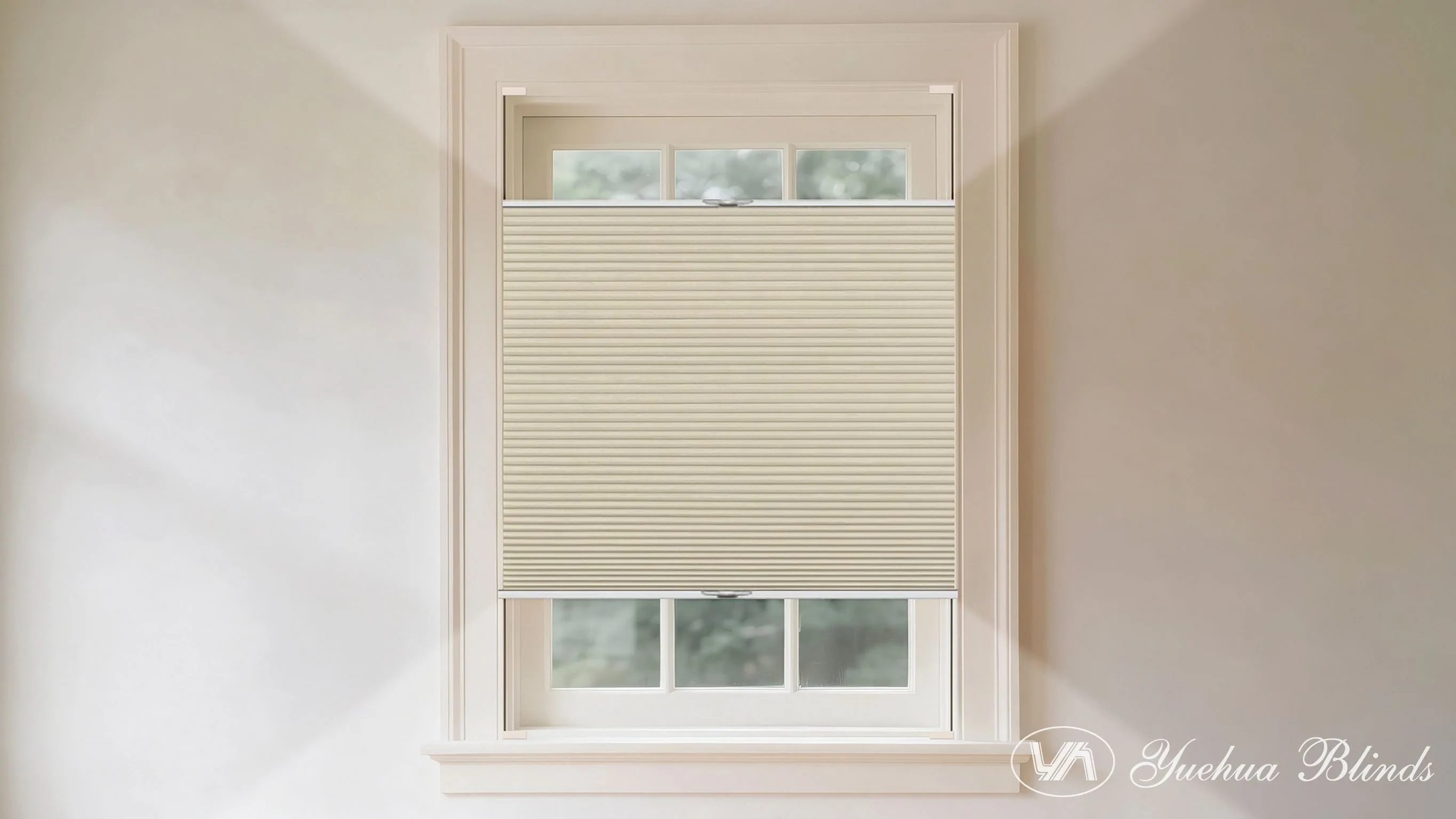
We ship cordless lines - the cordless zebra blinds are the standard example - and fit tension devices during production. For North American and EU programs, the cordless SKU carries lower compliance risk and aligns with retailer shelf policy.
Bottom line
Match the standard to the destination: EN 13120 for the EU, ANSI/WCMA through 16 CFR 1260 for the US, SOR/2017-117 for Canada. Ask for third-party test reports and permanent warning labels with every order, and shift the mix toward cordless where the retailer pushes for it.
For the five-market comparison including the UK and Australia, the global cord safety comparison has the table. US tariffs and Prop 65 sit in the US compliance guide. To source the cordless build, the cordless zebra blinds page lists the line.
Standard clauses summarized here are for orientation; always check the latest official versions. Standards referenced were checked against current obligations in October 2026.