

Zebra Blind Mesh: Regular vs Fine Mesh Sourcing Guide

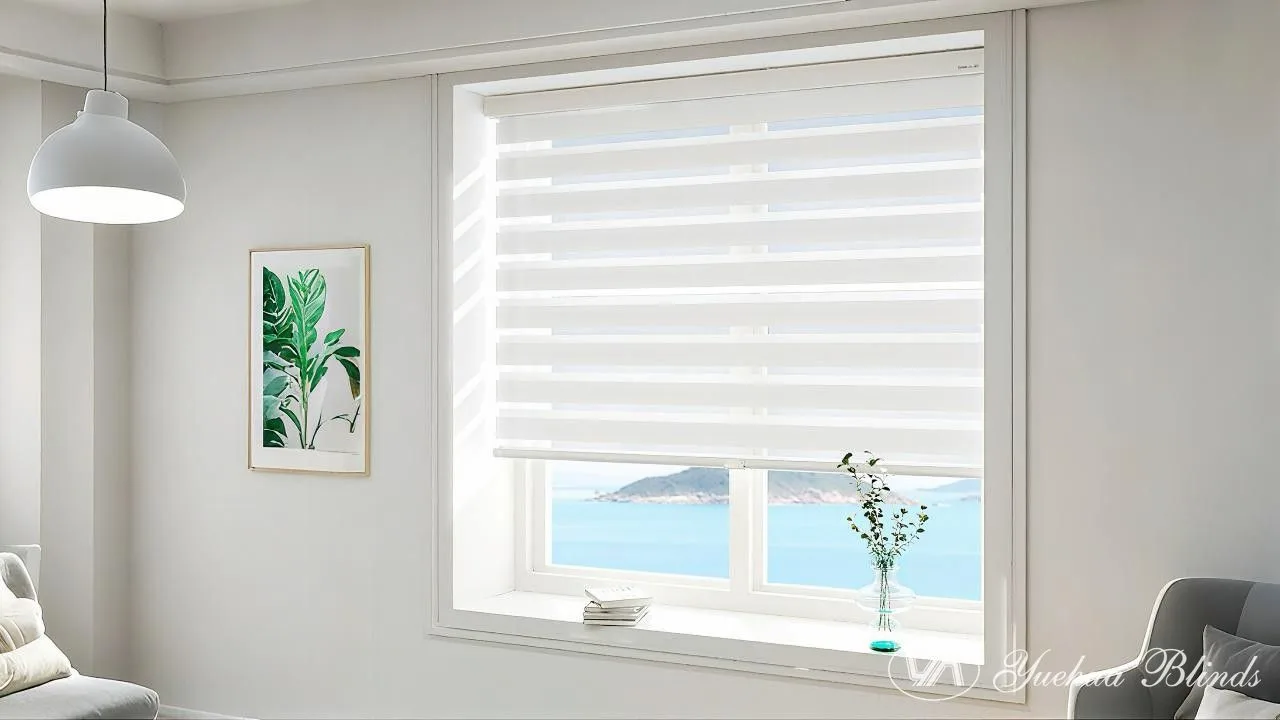
The sheer band of a zebra blind is what buyers actually see through, and it comes in two weaves: regular mesh and fine mesh. Regular mesh is transparent, bright, and cheap; fine mesh is softer, more private day and night, and costs more. The choice is not technical - it is your market's price point and privacy need. This guide compares the two, lists the other fabric specs to pin down, and flags how to stop a supplier from swapping fine mesh for regular.
Key takeaways
- Regular mesh has wider yarn spacing, a clear daytime view, more natural light, and lower cost; fine mesh is tighter, softer-looking, and holds privacy day and night.
- At night with interior lights on, regular mesh lets people see in; fine mesh keeps privacy both day and night.
- Zebra fabric is 100% polyester, the sheer section runs 150-200 g/m2, the opaque section 250-350 g/m2, and bands are commonly 5, 7, or 8 cm.
- Our fine-mesh line (YH554LU ball chain, YH559LU cordless) and standard mesh (YH554L, YH559L) source at 1000 pcs per pattern without color matching (2500 with), 40-50 days, clear box in a 5-layer carton, 4-6 pieces.
What the mesh is
Zebra blinds run two layers with alternating sheer and opaque horizontal bands. The sheer band - the mesh or open weave - decides the view, the light, and the privacy. Regular and fine mesh are the two mainstream sheer weaves, and they apply only to zebra sheer sections, not to other products.
Regular versus fine mesh
| Dimension | Regular mesh | Fine mesh |
|---|---|---|
| Mesh size | Larger, wider yarn spacing | Smaller, tight yarn spacing |
| Visual | High transparency, clear outdoor view | Refined, soft, more elegant |
| Light filtering | More light transmission | Softer, lower transmission |
| Privacy | Blurry by day; sees in by night with lights on | Good privacy day and night |
| Cost | Lower | Higher (finer weave, more yarn) |
| Market position | Economy, mass market | Mid to high end |
| Common use | Residential, economy hotels, offices | High-end homes, boutique hotels, commercial |
Regular mesh
Wider yarn spacing weaves more simply, lets daylight through, and carries the lower price, which makes it the most common zebra fabric on the market. It suits living rooms, bedrooms, economy hotel rooms, offices, and cost-sensitive bulk projects. The trade-off: at night with interior lights on, people outside can see in, so pair it with a blackout layer for bedrooms, and the open weave collects dust a little faster.
Fine mesh
Tighter yarn spacing weaves more slowly and uses more yarn, which gives a softer, more premium look and keeps privacy day and night. It suits high-end homes and villas, boutique and design hotels, showrooms, and projects where both appearance and privacy matter. Because the weave is harder, confirm the supplier can run it consistently and that the lead time accounts for the finer fabric.
Other fabric parameters
| Parameter | Description | Common range |
|---|---|---|
| Sheer section weight | Weight of the mesh band | 150-200 g/m2 |
| Opaque section weight | Weight of the banding band | 250-350 g/m2 |
| Overall average | Average of both bands | 120-200 g/m2 |
| Opaque blackout method | Woven black yarn versus coated | Woven feels softer; coated is cheaper but stiffer |
| Material | Zebra fabric base | 100% polyester |
| Band width | Sheer/opaque stripe width | Commonly 5, 7, 8 cm |
Buying tips
- Match mesh to your market. Regular for economy volume, fine for mid-to-high accounts.
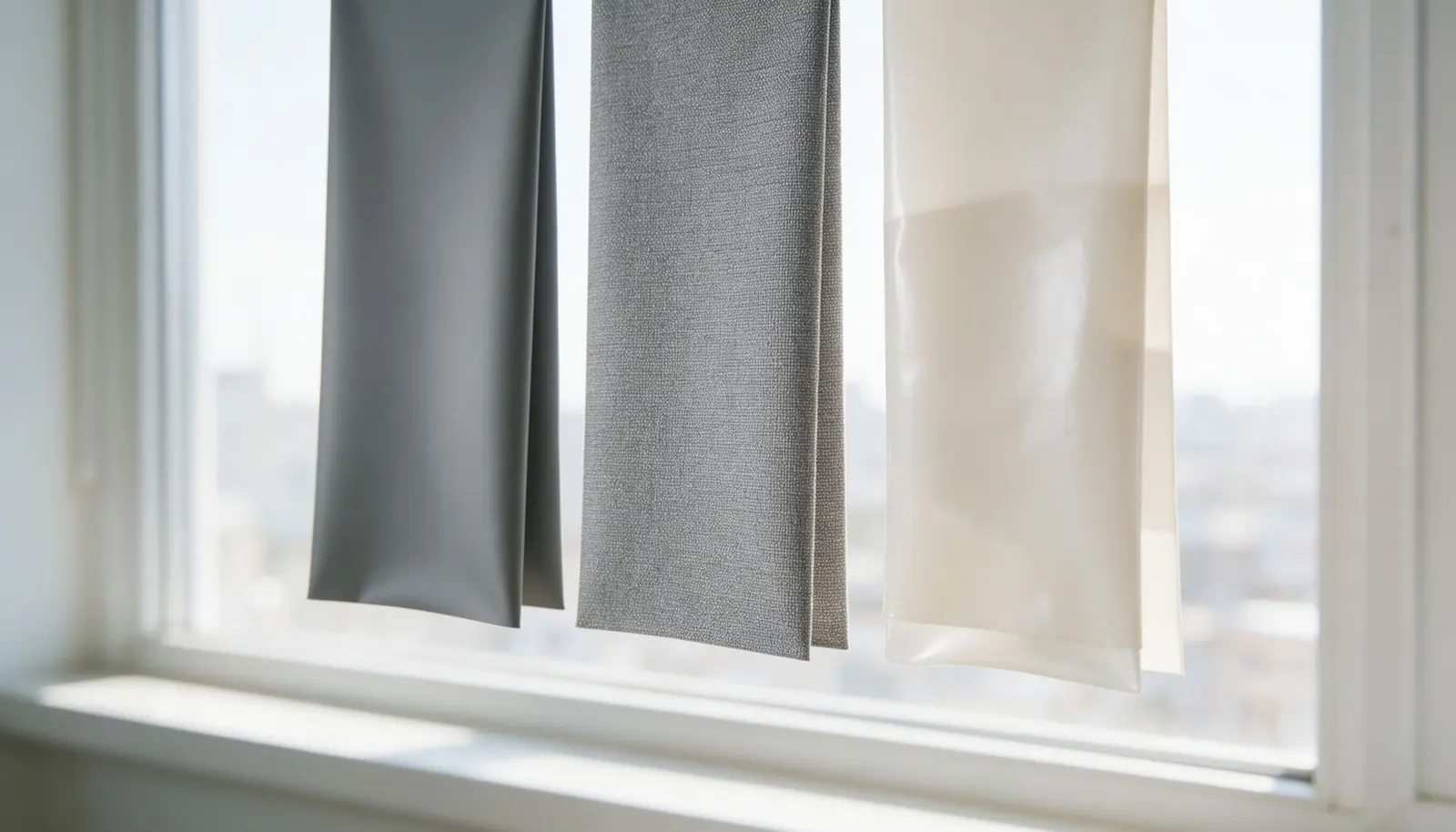
- Ask for sample cards. Compare the look and hand feel of both weaves before committing.
- Confirm the opaque blackout method. Woven black yarn feels softer; coated blackout costs less but feels stiffer.
- Write mesh type and weight into the contract. This is what stops a supplier from substituting regular for fine.
- Seal golden samples. Compare bulk density and appearance against the sealed sample, and watch batch color so the sheer and opaque bands stay matched.
- For fine mesh, lock supply early. The finer weave takes more time and yarn, so confirm capability and lead time up front.
Bottom line
Choose regular mesh for bright, price-driven residential and office volume; choose fine mesh for premium accounts that need privacy after dark. The roller versus zebra guide covers how the two products compare, and the fabric weight guide explains why the gsm numbers on this page matter. The fine-mesh zebra blind page lists the current SKU.