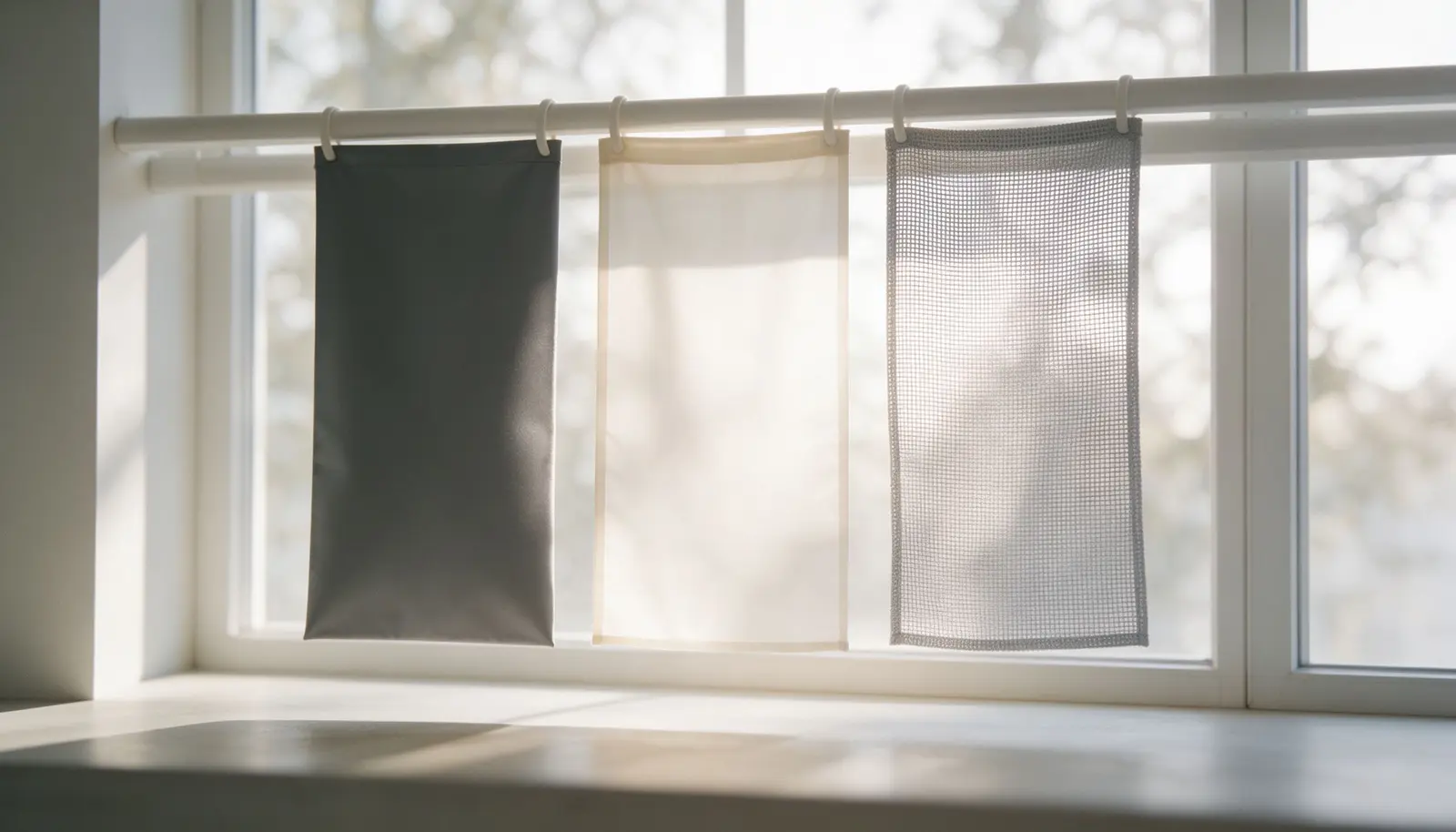


Blackout Fabric Process Comparison: Coated, Woven and Laminated
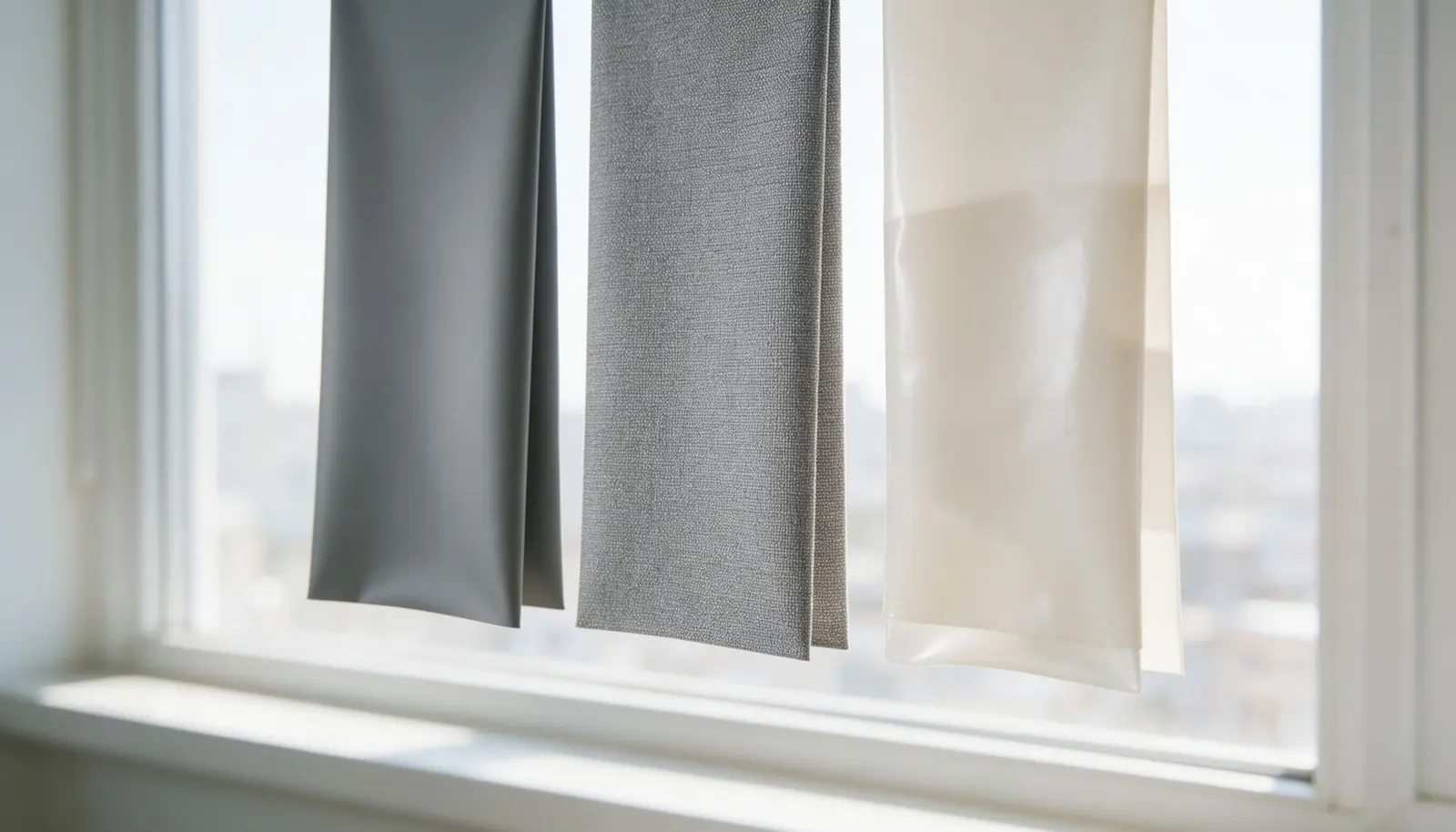
Blackout fabric is made three practical ways, and they sit at three price points. Coated blackout is the economy default, woven black-yarn blackout is the soft mid-range option, and TPU lamination is the near-full-blackout premium. The mistake buyers make is comparing blackout fabric without saying which process they mean, because the same g/m² number means very different things. We build blackout rollers on these same processes, and the notes below are the selection logic we apply to our own range.
Key takeaways
- Coated blackout is cheapest and reliable, but leaves visible coating on the back; PVC foam coating is prone to sticking or cracking in long-term, hot and humid storage.
- Woven black-yarn blackout has no coating marks, soft hand feel and washable durability, but costs more and very thin cloth can still let light through.
- Laminated TPU film reaches near-full blackout with a flat back, but costs most and needs peel-strength control to avoid delamination.
- Buy total fabric weight (face plus interlayer plus coating) with a plus/minus 5% tolerance, and never judge on face fabric alone.
Coated blackout
One or more light-blocking layers are coated onto the back of the base fabric, using fillers such as carbon black or titanium dioxide. It is the most traditional and widely used process.
Acrylic coating is resin-based with light-blocking fillers: softer hand feel, good environmental profile, and the mainstream choice for mid-to-high-end product. PVC foam coating is resin-based and foamed into a porous layer: lower cost and good blackout, but harder hand feel, and it is prone to coating adhesion or cracking during long storage, especially in hot, humid conditions. Ask the supplier about storage conditions and stability.
Coated blackout costs less and has mature, rich color options, but the back shows coating marks, it can carry an odor, PVC foam can stick or crack in storage, and coating may peel after repeated washing. It fits economy rollers, blackout blinds and cost-sensitive hotel projects; acrylic for mid-to-high-end, PVC foam for low-end volume.
Woven blackout (black yarn)
During weaving, blackout yarn (usually black polyester or black nylon) is woven into the middle layer, where it absorbs light. Front and back still carry normal color and texture.
There are no coating marks on either side, the hand feel is soft with good drape, there is no coating odor, and it is washable and durable with a better environmental profile than coating. The trade-off is cost, and very thin fabrics may still show slight light transmission because blackout depends on yarn density and weaving quality. It fits mid-to-high-end rollers, zebra blinds and retail home improvement. Zebra blackout versions commonly use this route, adding a black-yarn layer inside the double-band structure.
Laminated blackout (TPU film)
A light-blocking film (usually TPU) is laminated between two fabric layers by heat, relying on the film for full blackout. It is a newer, fast-growing process.
Lamination gives near-complete blackout, a flat unmarked back, soft hand feel, no odor, and a uniform film with stable quality. It is usually the most expensive of the three, demands strict equipment and bonding control, and carries a delamination risk if film-to-film adhesion drifts; the film can also reduce breathability. It fits high-end rollers, sunscreen blackout versions, and projects such as home theaters or laboratories where near-total darkness matters.
The three processes side by side
| Dimension | Coated | Woven (black yarn) | Laminated (TPU) |
|---|---|---|---|
| Cost | Low | Medium | High |
| Blackout effect | Good | Better | Excellent |
| Back appearance | Coating marks visible | No marks, clean | No marks, flat |
| Hand feel | Harder | Soft | Soft |
| Odor | Possible coating odor | None | None |
| Wash resistance | Average, coating may peel | Good | Better, watch delamination |
| Environmental profile | Average (PVC foam weaker) | Better | Better |
| Long-term storage | PVC foam may stick or crack | Good | Watch delamination |
| Positioning | Economy | Mid-to-high end | High end |
One case does not fit the three-way split: the blackout version of sunscreen fabric. Sunscreen is woven from PVC-coated polyester yarn, and its blackout comes from taking the openness factor to zero, when the yarns pack tightly. It is not a coating, and buyers should not expect it to behave like coated cloth.
Procurement guidance
- Match process to positioning. Economy volume: coated (mind PVC foam storage). Mid-to-high retail: woven. High-end needs: laminated.
- Require total fabric weight. It must include face fabric, middle interlayer or black-yarn layer, and back coating, in g/m², with plus/minus 5% as the accepted band. Do not read face weight alone.
- Lock sample-to-bulk consistency. Confirm bulk fabric matches the approved sample in weight, thickness, blackout and hand feel, and keep a golden sample on both sides.
- Watch PVC foam storage. If you buy PVC foam-coated product, confirm temperature and humidity control and ask for long-term stability data.
- Request peel-strength reports for laminated film, to guard against delamination in use.
- Do not take 100% blackout claims at face value. Blackout is graded by test method, which varies by standard; buy on actual test data, not marketing words.
These performance and cost descriptions are general industry experience. Actual specs, test reports and samples govern, because process capability varies widely between manufacturers.
Bottom line
Choose coated for price and volume, woven for a clean soft mid-range, and laminated for near-total darkness. Then buy on total weight, test data and a kept golden sample rather than on the marketing label. For how weight is measured, our fabric weight GSM guide covers the stack and tolerance, and our opacity guide positions blackout against light-filtering and sunscreen. A product built on the coated route is our blackout roller blinds.