

Zebra Blinds vs Roller Blinds vs Honeycomb Shades: A Buyer's Guide
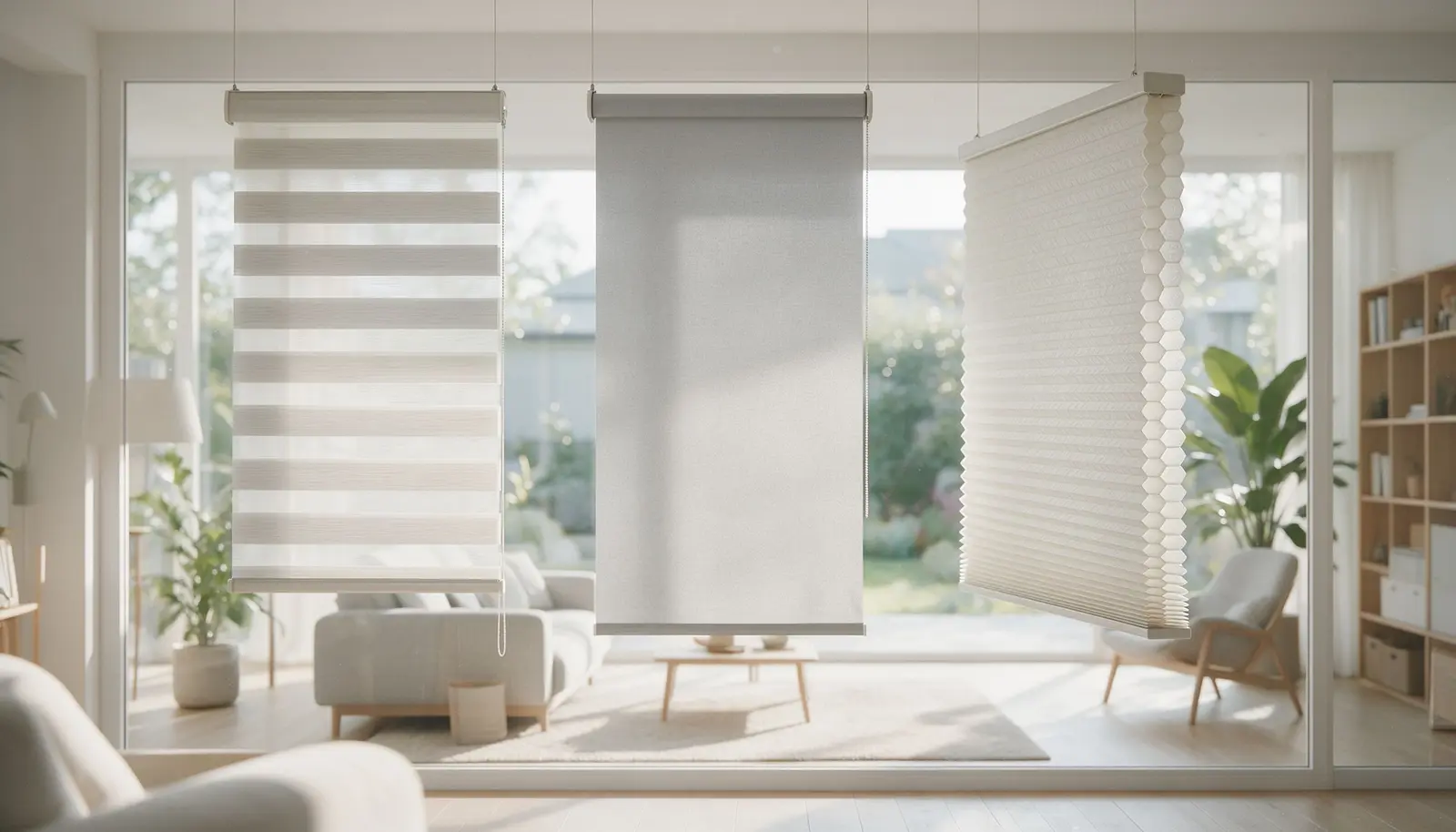
The honest three-way answer for most importers: rollers are the volume base, zebra is the mid-range upsell, and honeycomb is the insulation niche. All three come off the same production floor at the same MOQ and lead time, so this is a shelf-space and market call, not a factory-capacity call. Below we compare how each builds, what drives its price, and how it ships in a container.
Key takeaways
- Rollers pack flat and ship most efficiently, keeping per-unit ocean freight lowest; zebra blinds ship pre-assembled in the cassette and cost more per cubic meter.
- Zebra blinds give the end user adjustable light (align sheer or solid bands) that a single roller cannot; their cost is driven by mesh type, opacity, and control.
- Honeycomb shades are the only one of the three that insulates, because the non-woven cells trap still air; blackout honeycomb laminates an aluminum foil layer inside each cell.
- All three source at 1000 pcs per pattern without color matching (2500 with) and a 40-50 day lead time, in a clear box, 5-layer carton, 4-6 pieces.
Zebra blinds
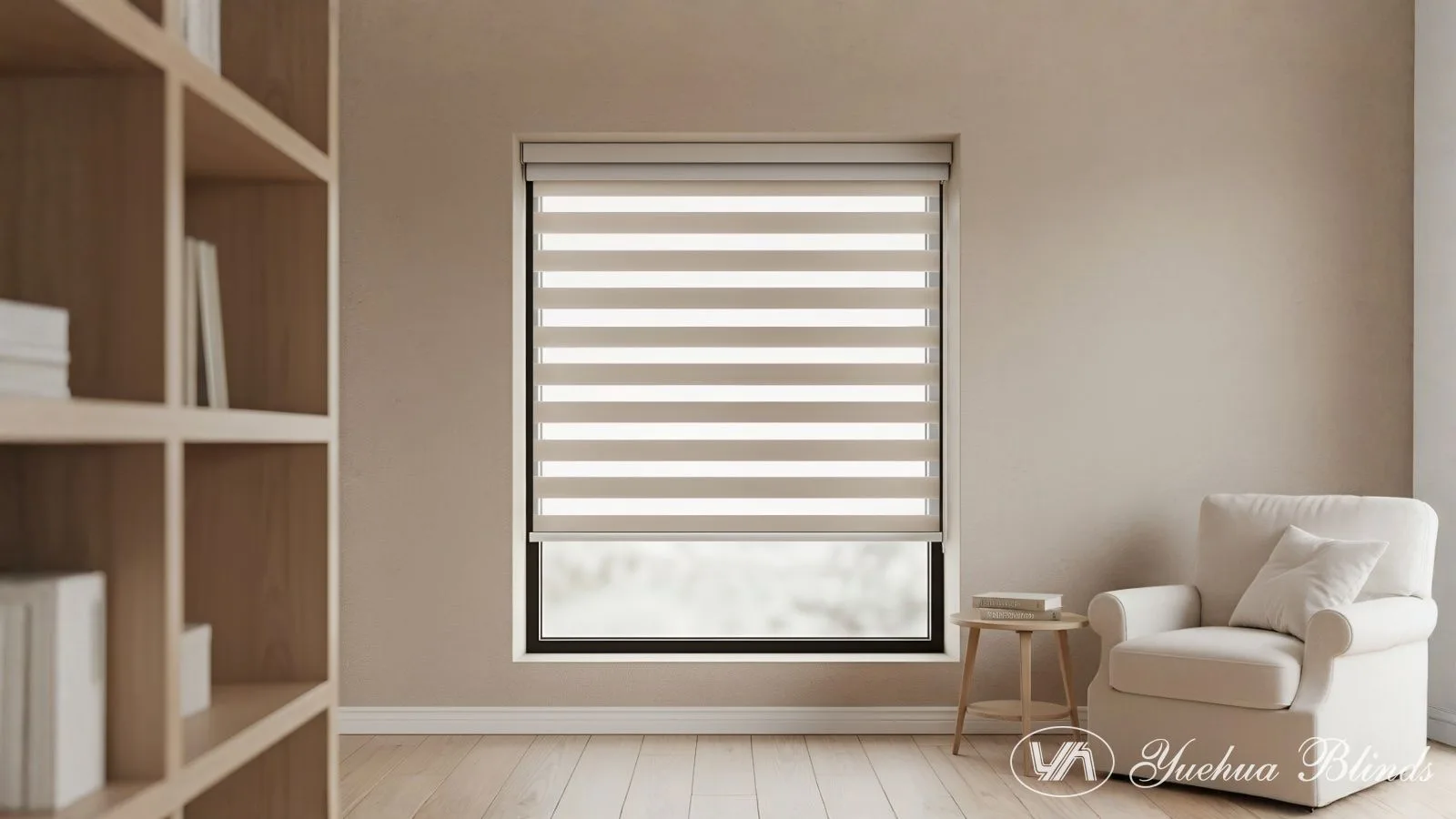
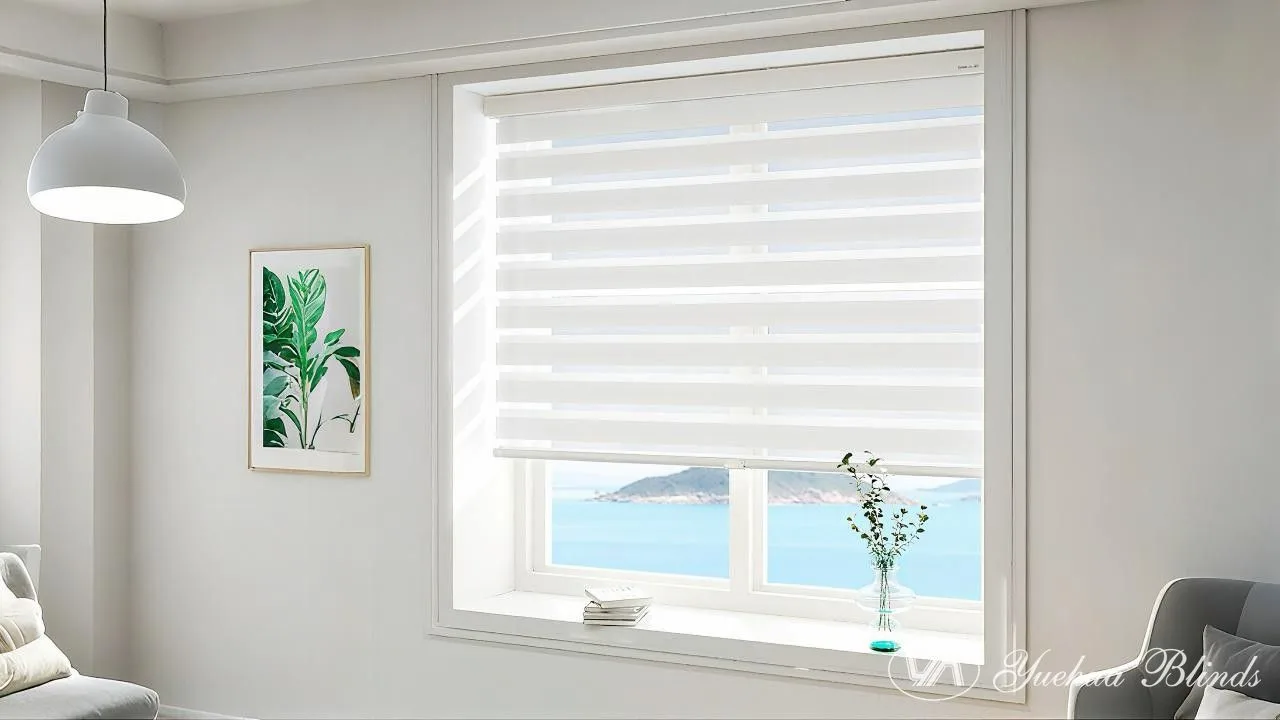
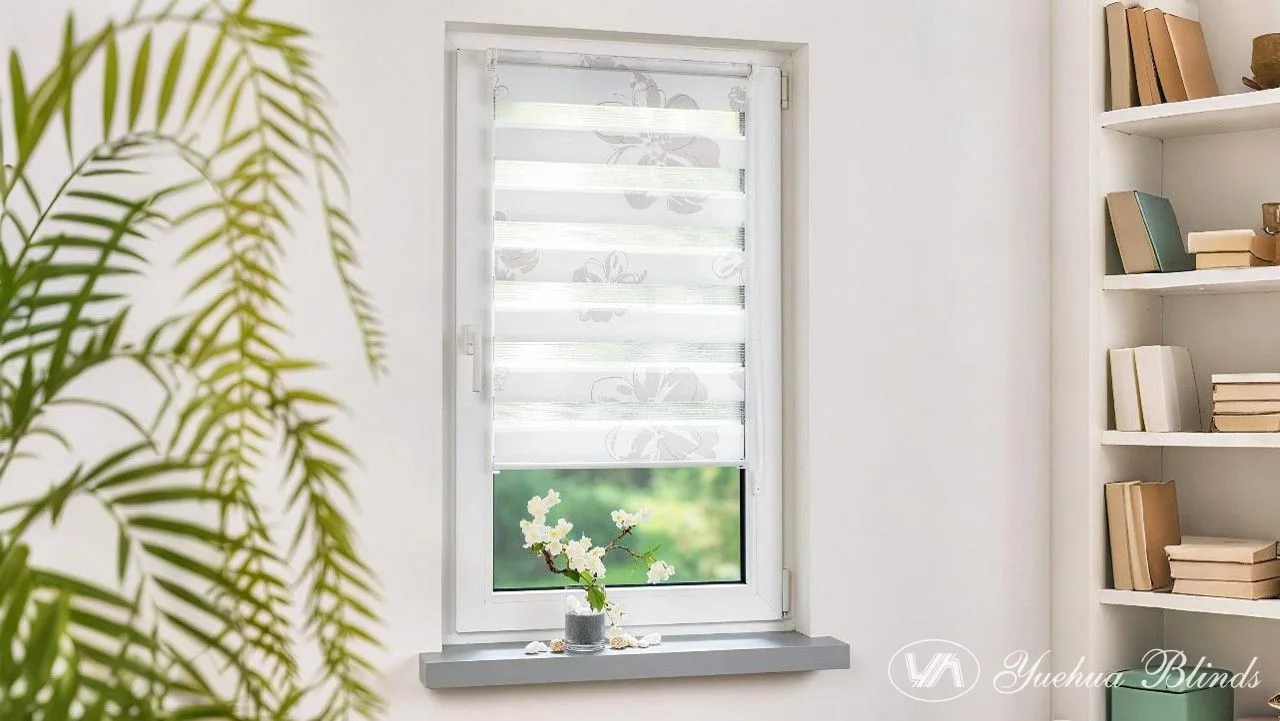
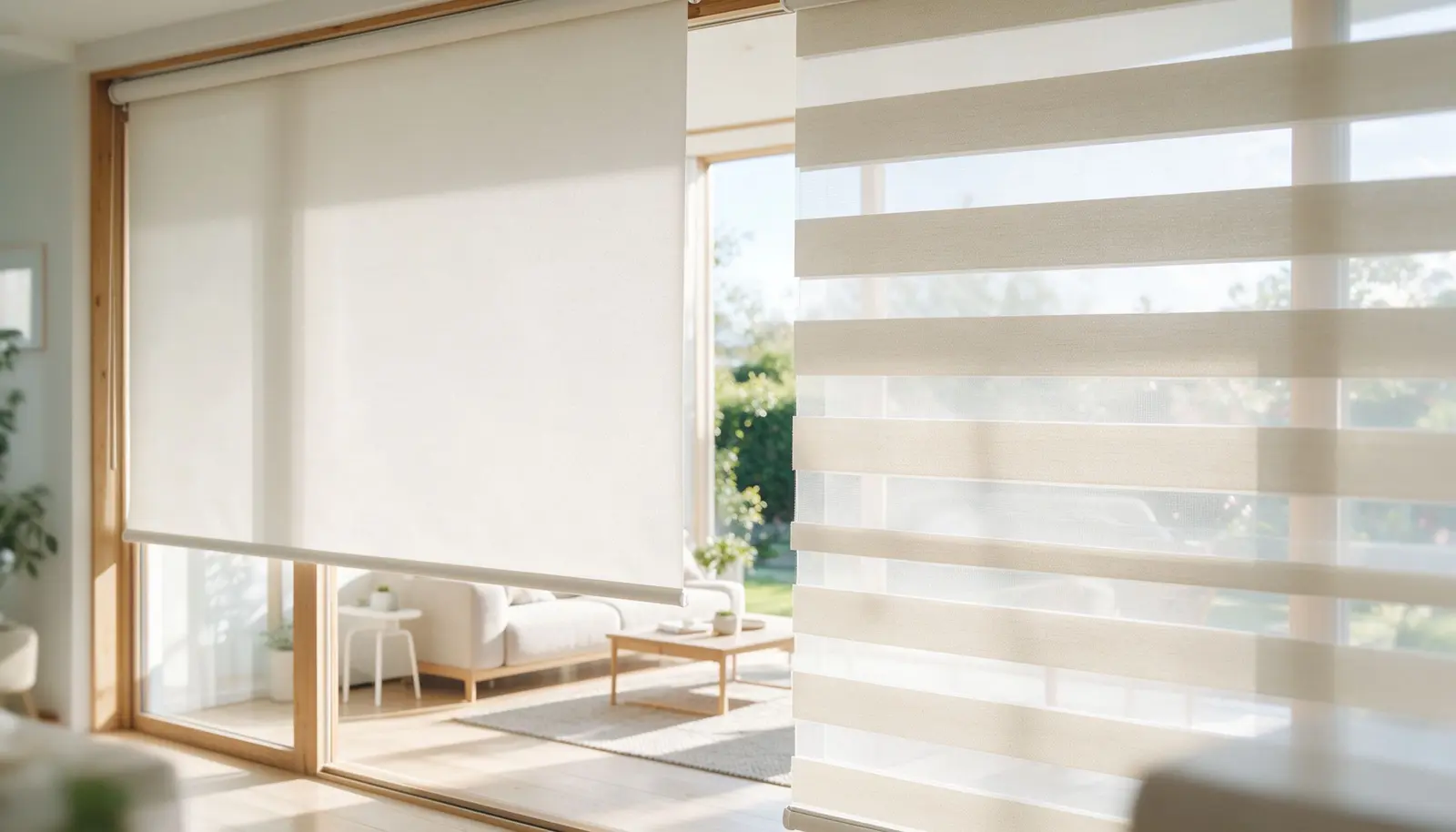
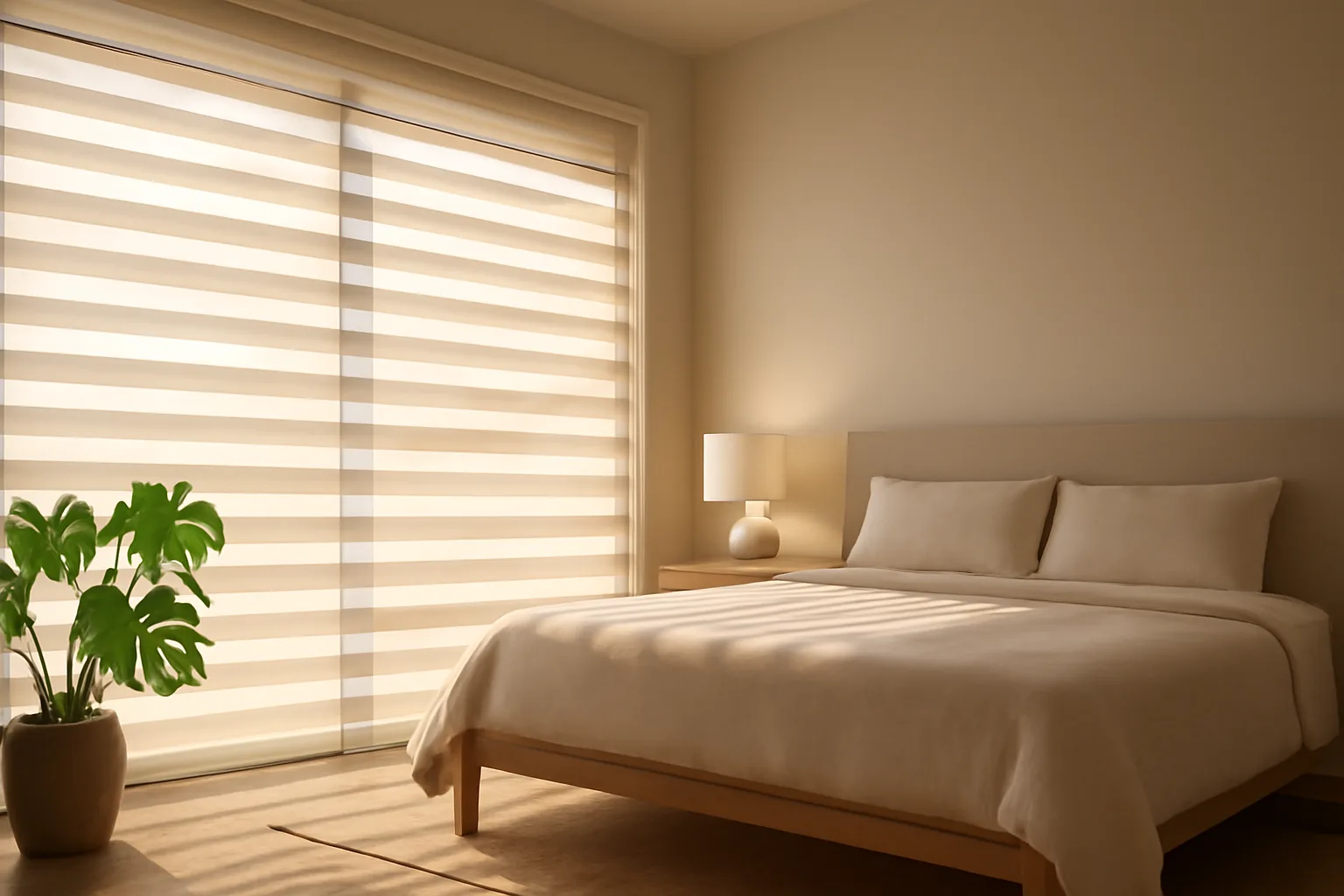
Zebra blinds run two layers of alternating solid and sheer fabric. The user aligns the sheer stripes for a view-through or the solid stripes for privacy, without raising the blind. That adjustable middle position is the whole reason they exist.
Fabric is nearly always 100% polyester (our YH554L standard, YH554LU fine mesh). Cost is driven by mesh type (regular versus fine), opacity (blackout with black yarn woven in versus light-filtering), cassette design, material thickness, and control - bead chain, cordless (our YH559L), or motorized. The regular versus fine mesh guide goes deeper on the sheer-band choice.
Bulk note: zebra blinds ship with cassette, brackets, and top tube pre-assembled, which takes more room per unit than flat-packed rollers. Container loading is lower, so per-unit freight is higher.
Roller blinds
A roller is one fabric sheet around a tube - the simplest build, available in blackout, light-filtering, and sunscreen. Our base YH551, blackout YH551B (100% polyester), and sunscreen YH551SC (30% polyester, 70% PVC) show the range. Pricing moves with fabric grade, tube material and thickness, control type, and custom printing.
Bulk note: rollers pack flat and compact, giving the highest container efficiency of the three and the lowest per-unit ocean freight. That is why they are the default for high-volume projects, rentals, and hotels. If you only need the roller-versus-zebra decision, the head-to-head guide covers it.
Honeycomb shades
Honeycomb (cellular) shades trap air in hexagonal non-woven cells, which is what insulates. Two quality checkpoints matter on inspection: cell edges must be cut cleanly and evenly, and cell creases must be pressed evenly and tightly. Our YH557 is standard semi-sheer non-woven; YH557B is blackout.
Blackout honeycomb laminates an aluminum foil layer inside each cell; the non-blackout version is standard cellular fabric without the foil. Price moves with cell size, cell depth, fabric weight (gsm), the foil lining, cord style, and motorization. Confirm cell size, blackout spec, and cord style before you order.
How they compare
| Factor | Zebra | Roller | Honeycomb |
|---|---|---|---|
| Light control | Adjustable (align bands) | Fixed by fabric | Fixed by fabric |
| Insulation | Low | Low to medium | High |
| Container efficiency | Lowest (pre-assembled) | Highest (flat-packed) | Medium |
| Per-unit freight | Highest | Lowest | Medium |
| Best for | Versatile light control | High volume, low freight | Energy saving, insulation |
Bottom line
Start with rollers as your volume foundation - lowest freight, broadest fabric range. Add zebra as a mid-range line for retail buyers who compare on adjustable light. Carry honeycomb only where insulation and energy savings actually drive the sale. The same sourcing terms make all three practical to stock together. The roller blinds page lists the current fabric variants.