

PVC Blinds Guide: Mini, Faux Wood & Vertical Types

PVC is the economy backbone of the blind trade - cheap, moisture-proof, wipe-clean - but a PVC blind is not one product. It covers mini blinds, faux wood, and verticals, and the difference between them is the slat. The two buying variables most people miss are calcium carbonate content, which decides whether a slat flexes or snaps, and the slat thickness on mini blinds, which decides whether it sags. This guide separates the three types and flags what to check on each.
Key takeaways
- PVC blinds split into mini blinds (15-25mm slats, mass retail), faux wood (35-63mm wood-look), and verticals (89-127mm slats for large openings) - specify which, don't just say PVC.
- High calcium carbonate makes cheap, hard, brittle slats; low calcium carbonate makes tougher, pricier slats - match the grade to your climate and price point.
- For mini blinds, measure slat thickness yourself: the range is 0.30-0.40mm, around 0.35mm mainstream, and thin slats sag.
- Our PVC faux wood line (YH762T 1.5", YH763T 2", cordless YH763CL) sources at 1000 pcs per pattern without color matching (2500 with), 40-50 days, clear box in a 5-layer carton, 4-6 pieces.
What PVC is
PVC is low cost, does not absorb water, wipes clean, and takes a wide range of colors. Its weaknesses are average weathering - it can soften, discolor, or age under long direct sun - and an environmental story that is harder to defend than PS, because it contains chlorine. PVC is the most common and cheapest material in the faux wood category, but faux wood also includes PS and composite types, so the label alone is not enough.
Calcium carbonate is the hidden dial
Calcium carbonate is added as a filler to cut cost and tune performance. High filler makes a hard, rigid, cheap slat that turns brittle and cracks, suited to economy high-volume lines. Low filler makes a tougher, impact-resistant, more expensive slat for quality accounts. Do not chase the lowest price at the cost of toughness; ask for the formulation.
The three PVC types
Mini blinds are the classic, highest-selling PVC blind. Slats run 1 inch (25mm), with 1/2 inch (15mm) ultra-narrow options. Slat thickness is 0.30-0.40mm, around 0.35mm mainstream (tolerance about plus or minus 0.03mm), and economy stock can go as thin as 0.32mm. Shapes are C, S, or flat, in solid whites, ivories, grays, and beiges. This is the extremely low-priced mass-retail volume line, with a small stack height, for economy homes, rentals, offices, and dorms.
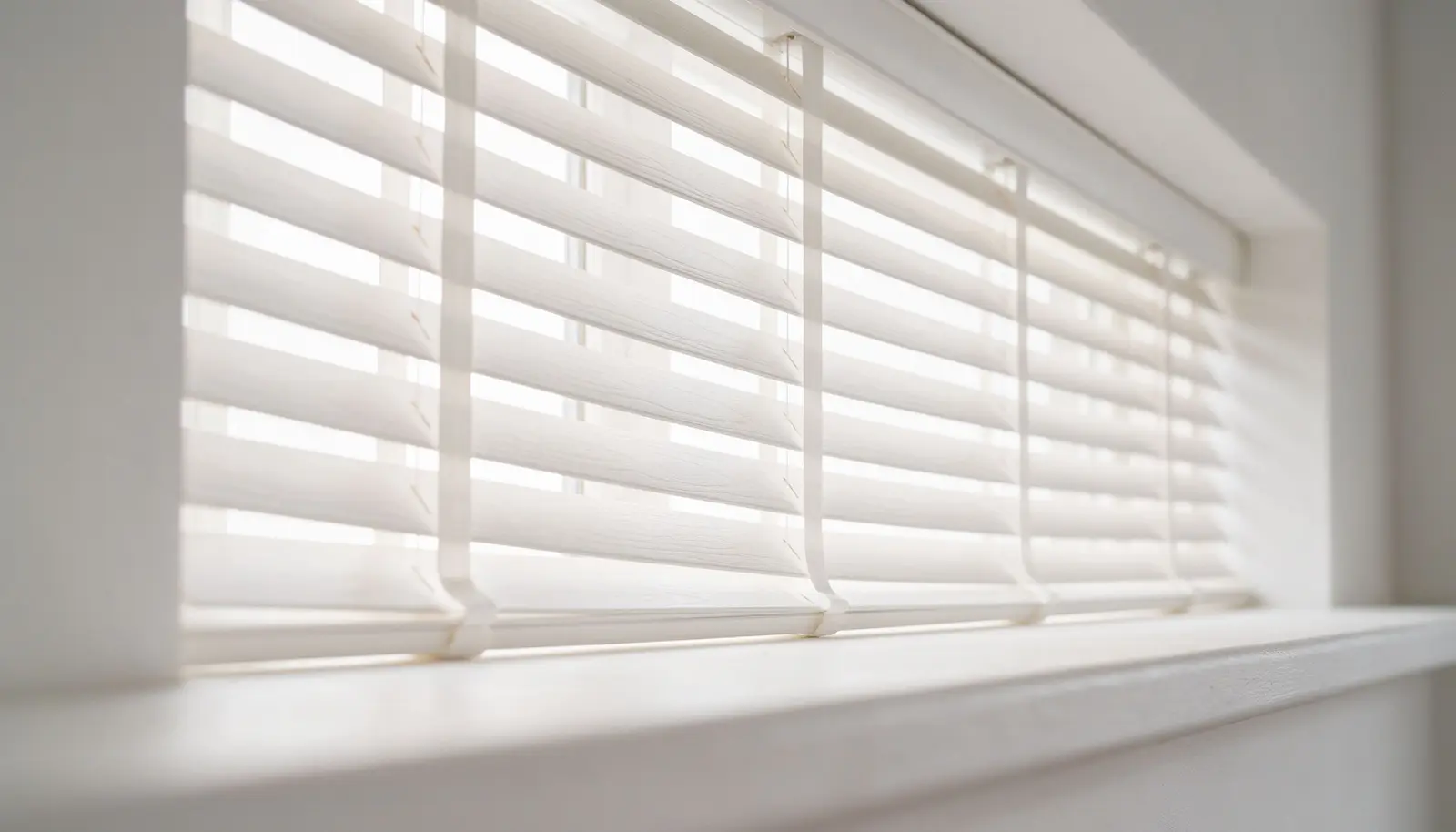
Faux wood blinds are PVC slats embossed to look like wood. Slats run 2 inches (50mm), 2.5 inches (63mm), and 1.5 inches (35mm), thicker than mini slats for rigidity and wood feel, usually in S or C shape (S closes tighter and blacks out better). Colors are wood grains - white oak, walnut, cherry, maple - plus solid white and ivory. They serve mid-low home-improvement retail, hotel and apartment projects, and wet rooms. Note: PVC foam coating on the back of blackout roller fabric can stick or crack in long storage, especially in heat and humidity; embossed or powder-coated PVC faux wood slats do not have that problem.
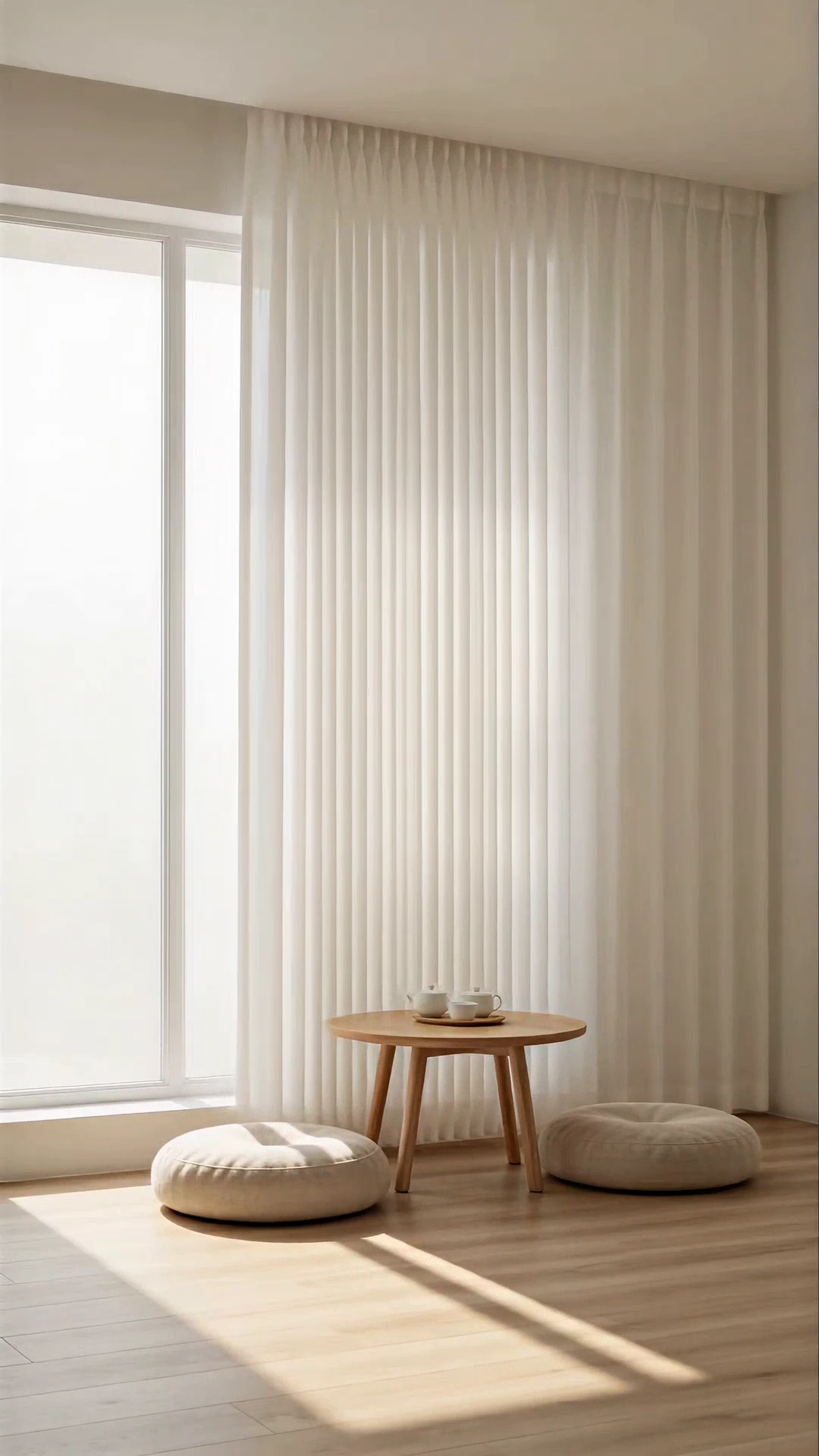
Vertical blinds hang slats vertically for large openings. Slats are 89mm (3.5 inch) or 127mm (5 inch), with height customizable up to 3 meters or more, and thicker than horizontal slats to stay stiff when hanging. They rotate 180 degrees for light control and stack fully to one side, which suits floor-to-ceiling windows, sliding doors, office partitions, and commercial spaces.
At a glance
| Dimension | Mini blinds | Faux wood | Vertical |
|---|---|---|---|
| Slat width | 15-25mm | 35-63mm | 89-127mm |
| Direction | Horizontal | Horizontal | Vertical |
| Price positioning | Lowest | Mid-low | Medium |
| Main colors | Solid | Wood grain + solid | Solid + wood grain |
| Best windows | Small to medium | Medium | Large / sliding doors |
| Stack | Small | Medium | Full side stack |
| Main market | Mass retail volume | Home-improvement retail | Project / commercial |
Procurement checklist
- Name the type. Mini, faux wood, and vertical are different products. Do not write PVC blinds on the PO without which one.
- Confirm calcium carbonate. Economy lines can carry high filler; quality accounts should carry low filler. Request the formulation.
- Separate PVC from PS faux wood. PVC is cheapest but softer in heat; PS is lighter, more heat-resistant, and greener but costs more. See our PS faux wood guide for the difference.
- Measure mini slat thickness. Thin slats sag; verify the actual thickness against the nominal 0.35mm spec.
- Check vertical slat stiffness. Hanging slats must stay flat; test stiffness and flutter on large sizes.
- Samples and golden samples. Confirm color, grain, gloss, and toughness on physical samples and seal one as the acceptance benchmark.
Bottom line
Specify the exact PVC type and calcium-carbonate grade, measure mini slat thickness on receipt samples, and seal a golden sample for color and toughness. The faux wood guide goes deeper on formulation, and the faux wood venetian page lists the current PVC slats.