

Honeycomb Shades Energy Efficiency: A B2B Buyer's Guide
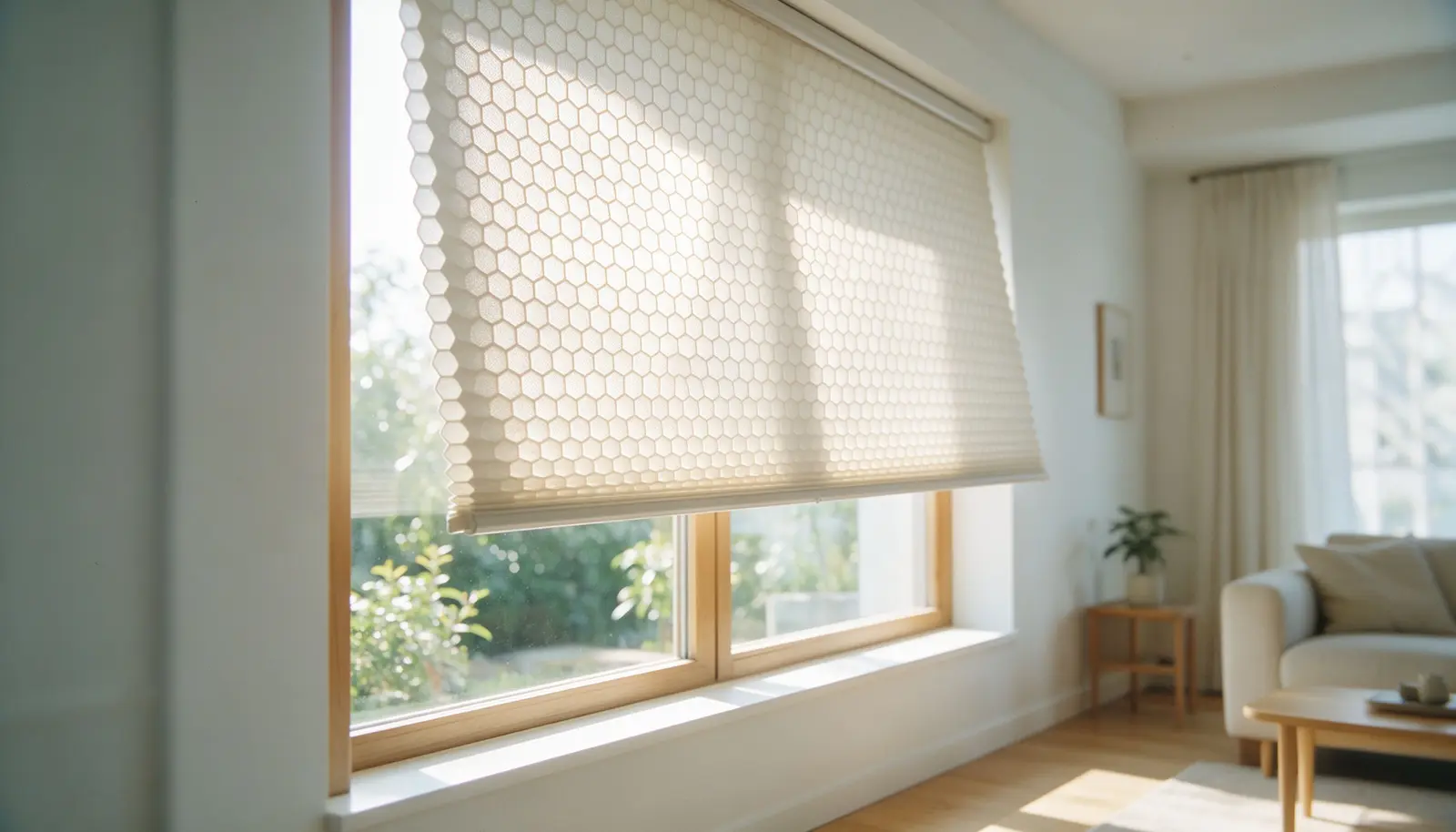
For importers and retailers asked about energy-saving window shades, honeycomb (cellular) shades are the honest answer: they insulate because the fabric cells hold still air against the glass, not because of any coating. The trade-off is price and stack height - you pay more than for a roller, and the headrail stack runs deeper. Below we break down how the insulation works, what single-cell versus cell-in-cell means for your market, and the sourcing terms our factory runs on.
Key takeaways
- Honeycomb shades cut winter heat loss through windows by up to 40% by trapping still air in hexagonal cells; the same air layer slows summer solar heat gain.
- Our honeycomb line is non-woven fabric, available sheer to blackout, with pull-cord, ball-chain, and cordless builds (for example the cordless YH335 and cordless blackout YH335B).
- Cell-in-cell shades (our YH557C) add a second cell layer for colder climates; single-cell (YH557) covers most temperate markets at a lower price.
- Sourcing terms match the rest of our range: 1000 pcs per pattern without color matching (2500 with), 40-50 day lead time, clear box in a 5-layer carton, 4-6 pieces per carton.
How cellular insulation works
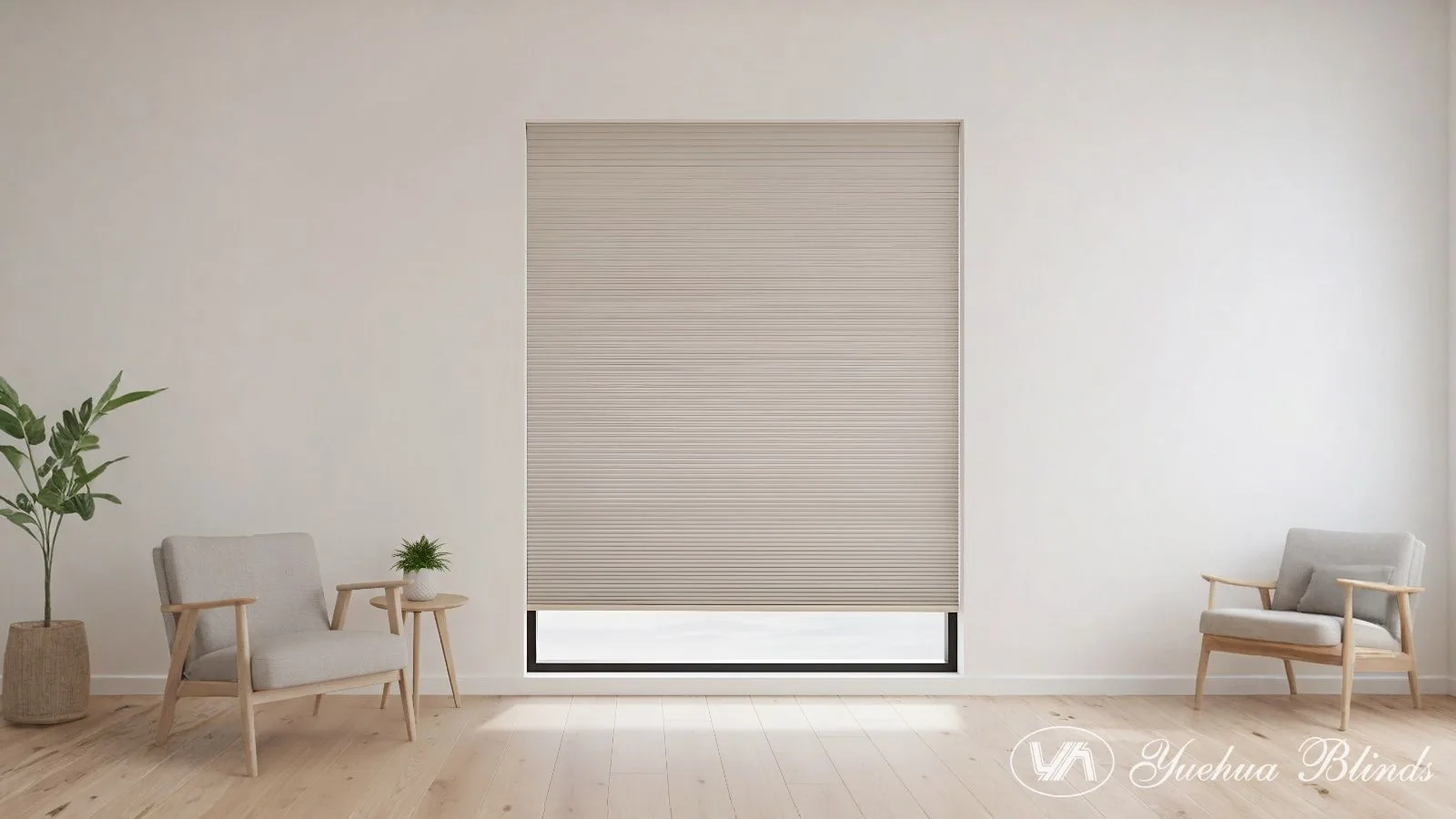
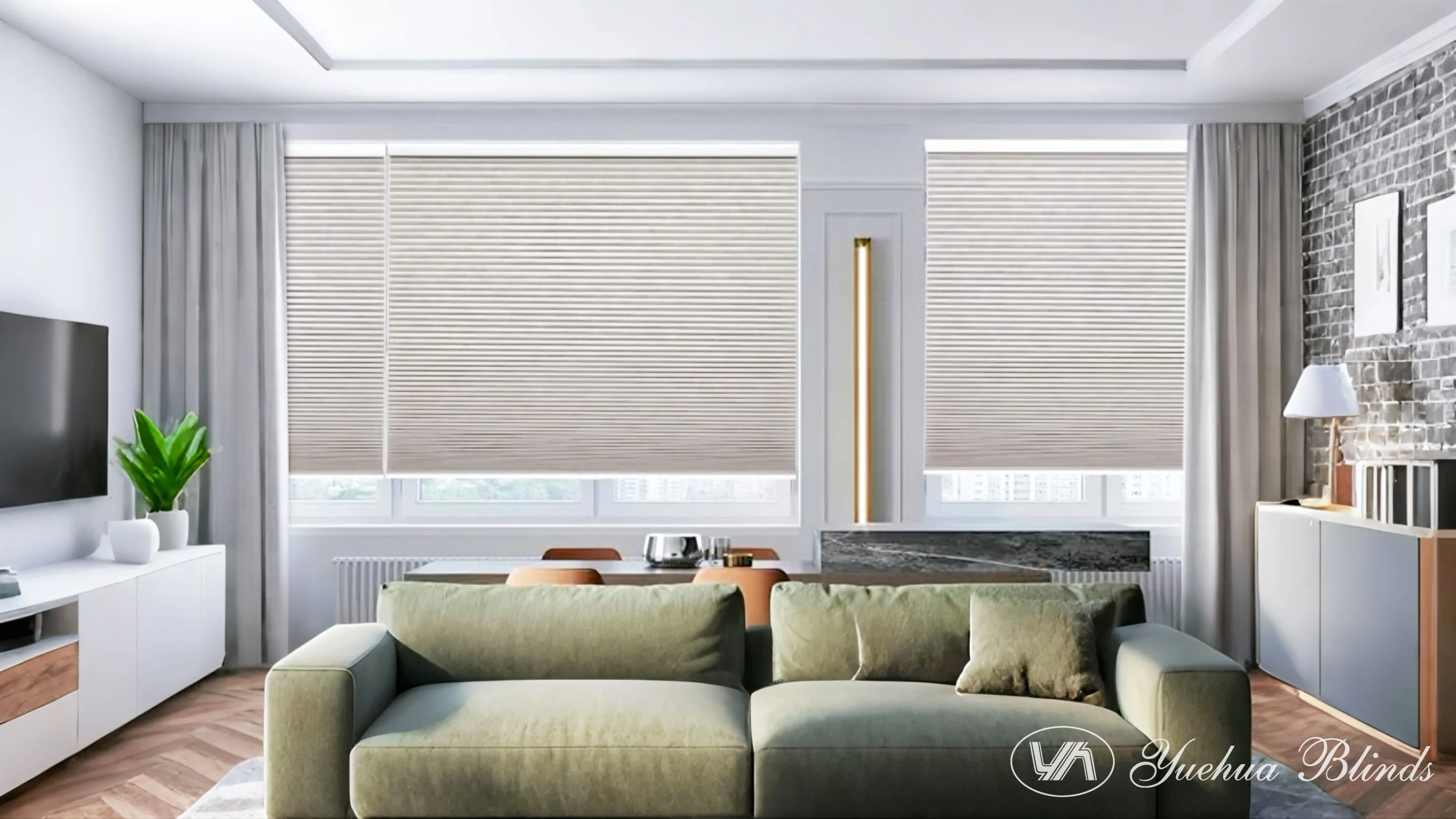
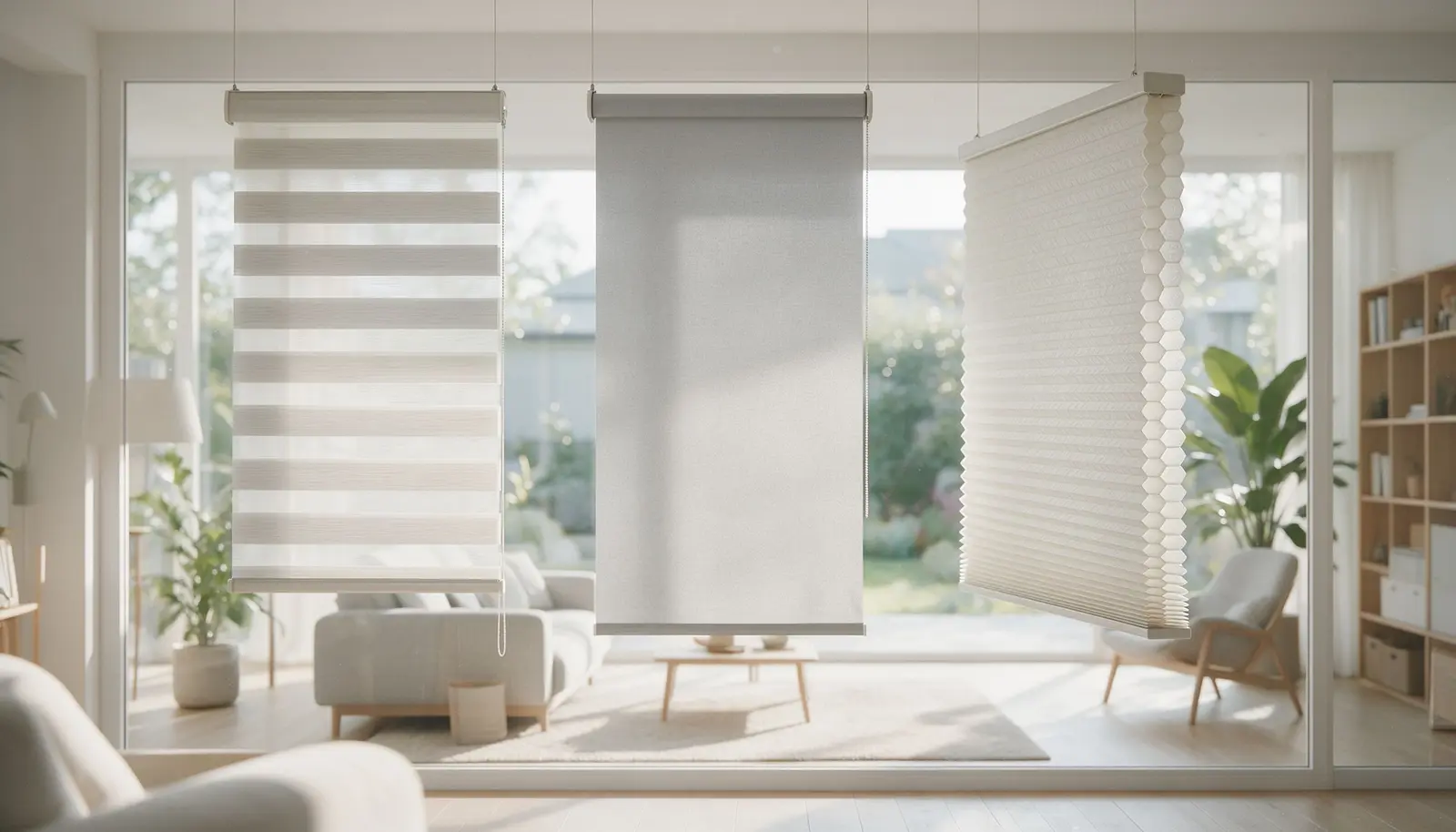
A flat shade lets air circulate next to the glass, so heat moves through the window freely. The sewn honeycomb cells pin a layer of still air between the room and the pane. Still air is a poor conductor, which is what slows heat transfer. In winter that means less indoor heat escapes through the glass; in summer the same barrier keeps solar heat from reaching the room, so air conditioners run less.
We cite up to a 40% reduction in winter heat loss because the real number depends on window frame quality, the installation gap, and climate. It is a meaningful figure for a soft shade, but it is not a replacement for double glazing.
Single cell versus cell in cell
Single-cell shades (our YH557 semi-sheer and YH557B blackout, both non-woven) deliver the insulation benefit at a competitive price and a slimmer stack. They are the right default for most European and North American retail shelves.
Cell-in-cell shades (our YH557C, blackout non-woven, cordless) add a second cell layer for higher insulation in cold, heating-dominated markets. The trade-off is a fuller stack and a higher price point, which is why they sell best where winter fuel bills drive the buying decision.
Opacity and operation
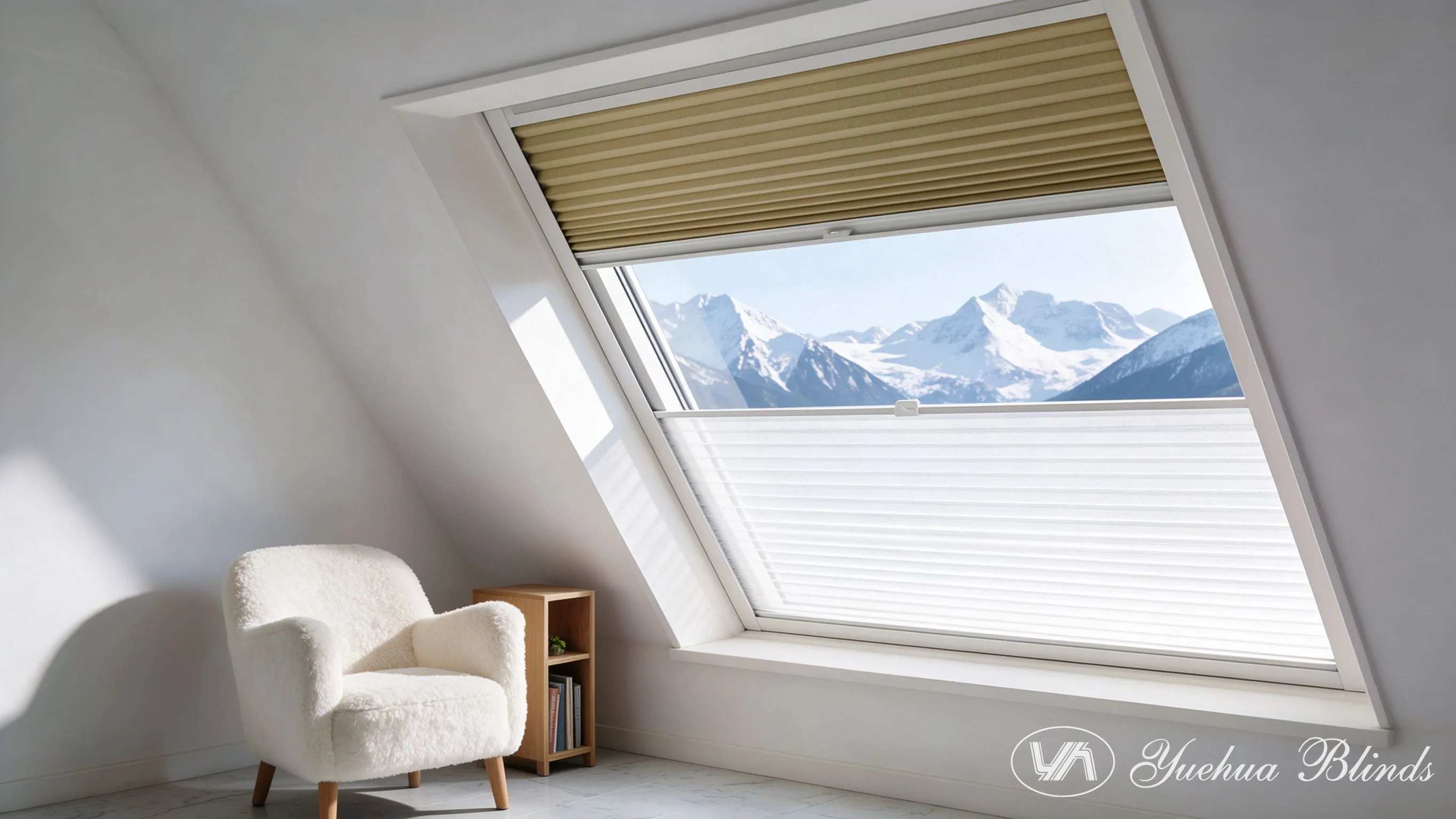
The line runs semi-sheer to blackout in non-woven fabric, so the same family covers day privacy and bedroom darkening: blackout YH557B or cordless blackout YH335B for bedrooms, semi-sheer YH557 for living areas.
Operation follows your market's cord rules. Pull-cord and ball-chain versions exist, and we build cordless variants (YH335 semi-sheer, YH335B blackout, YH557C cell-in-cell) for EU and US buyers who no longer want exposed lift cords. If cord compliance is the reason you are here, our cord safety standards comparison lays out EN 13120 against the US and Canada rules.
Sourcing terms
All honeycomb shades run on the same terms as the rest of our catalog: MOQ 1000 pcs per pattern without color matching, 2500 pcs with color matching, and a 40-50 day lead time. Packaging is a clear inner box, 5-layer master carton, 4-6 pieces per carton. We have supplied window treatments since 1998 on BSCI-audited production, and factory inspections are welcome.
Bottom line
Stock single-cell honeycomb for a competitive energy-saving range; add cell-in-cell only for cold-climate accounts. If you are weighing honeycomb against zebra and rollers for light control and price, our three-way buyer's guide covers the full comparison, and the honeycomb shades page lists the current SKUs.